Learning to code for kids no longer has to mean sitting still and staring at a monitor. Through the medium of robotics, abstract lines of code turn into real physical adventures. By directly assembling and moving robots, children can learn to solve problems concretely while honing their critical thinking skills from an early age.
Why Choose a Physical Medium?
Learning programming languages can often feel boring for children if the approach is purely theoretical. Combining it with physical devices provides a completely different learning experience.
Turning Abstract Concepts into Reality
The biggest challenge when learning to code is understanding its abstract concepts. However, in the world of robotics, every written code has an immediately visible impact. Based on the information provided, if the input instructions are wrong, the robot might spin in place or hit an obstacle. This "trial and error" process is crucial because children eventually see coding as a tool to achieve a clear goal, not just a theory to be memorized.
Training Step-by-Step Problem Solving
Robotics is a great way to train computational thinking. When children are given a simple task, like making a robot pick up an object, they are required to break the command down into small steps. They must arrange a sequence like: move forward, grab the object, then turn around. This method trains children to be calmer when facing big problems, as they know how to analyze them into smaller, more manageable parts.
Building a Resilient Mentality and Social Skills
Beyond logic and technical skills, building robots also provides space for children to develop their emotional and social skills.
Freedom of Expression Without Fear of Failure
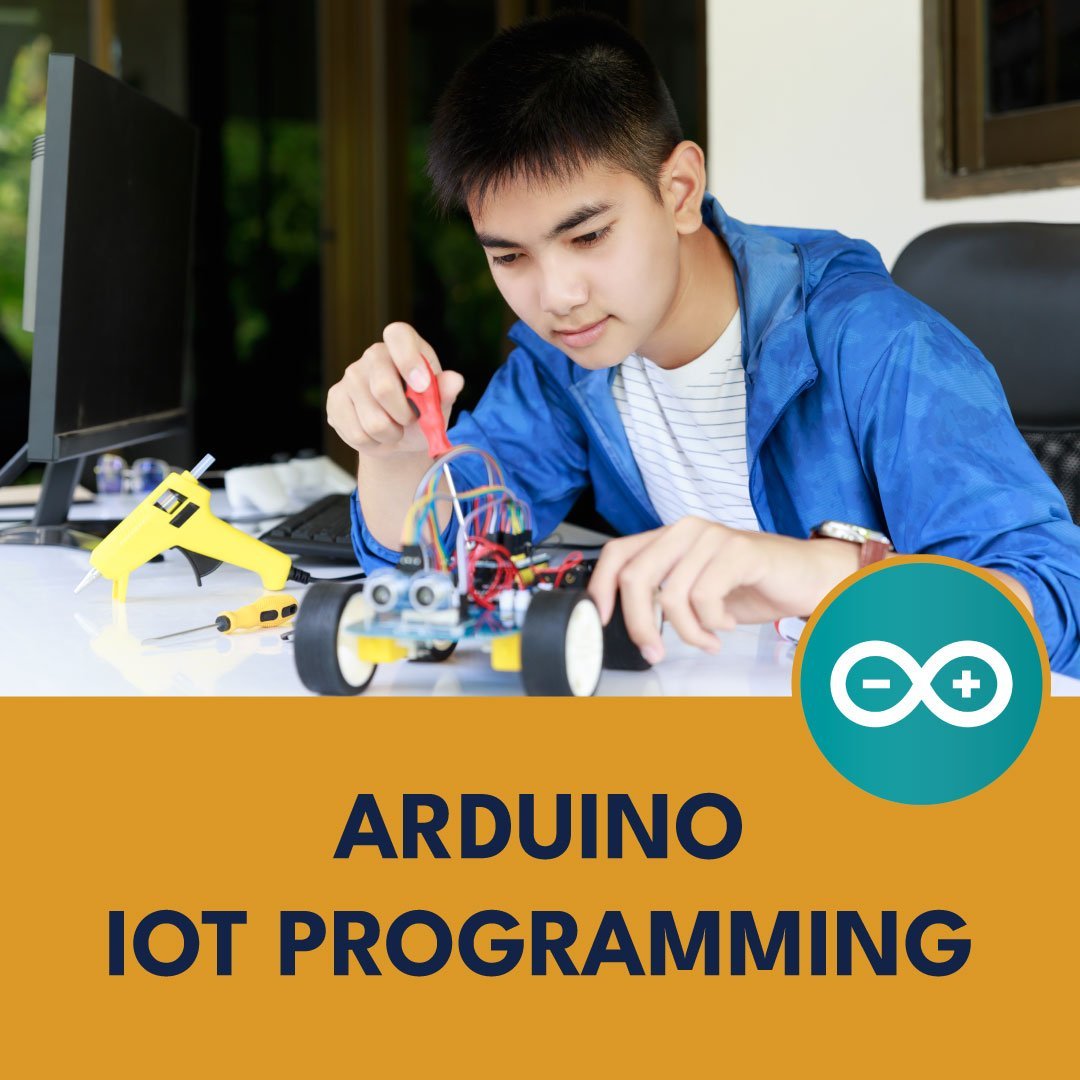
One interesting thing about learning robotics is the disappearance of the concept of "failure". There are only solutions that haven't worked yet. When the robot's sensor doesn't respond, children are invited to do debugging—like checking cable connections or figuring out where the coding logic is reversed. This process of finding mistakes actually builds thoroughness, trains patience, and forms an unyielding mindset.
A Space to Learn Compromise and Communication
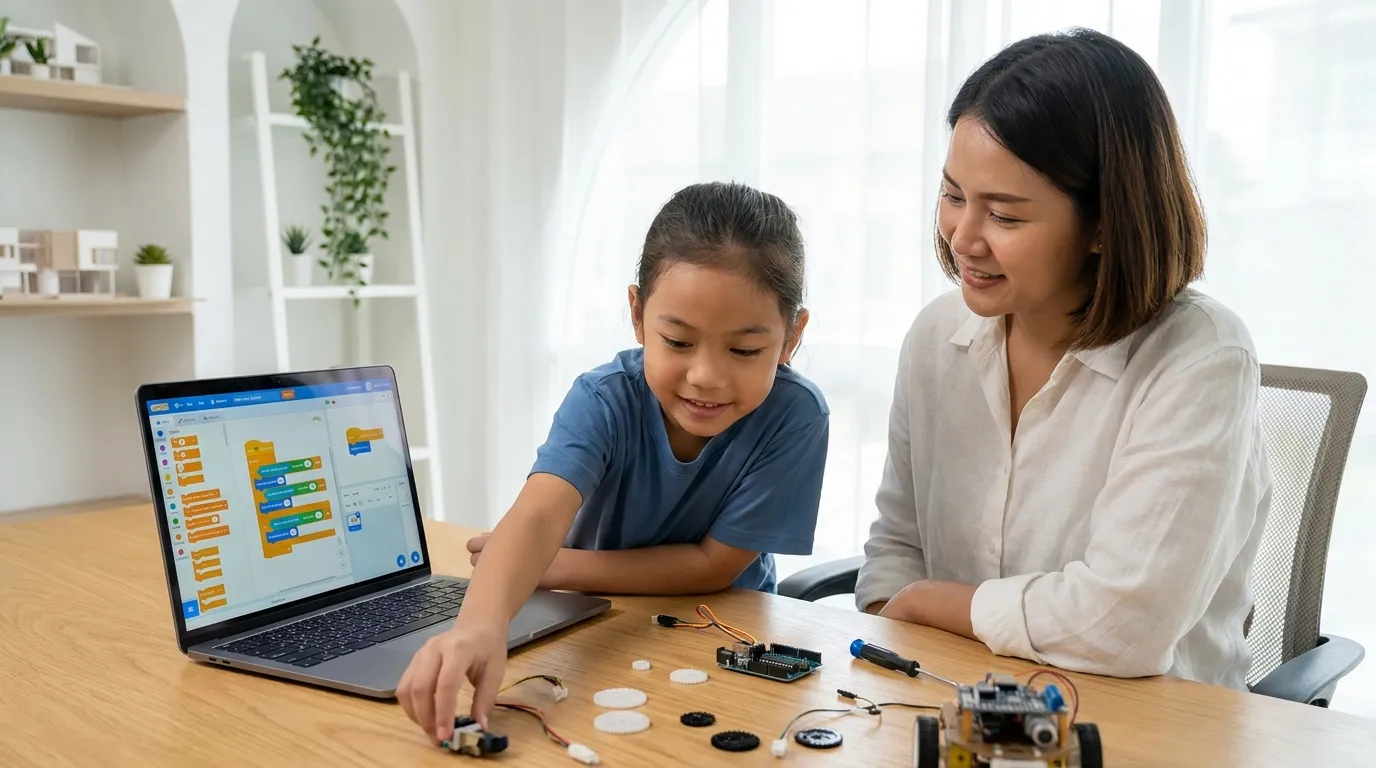
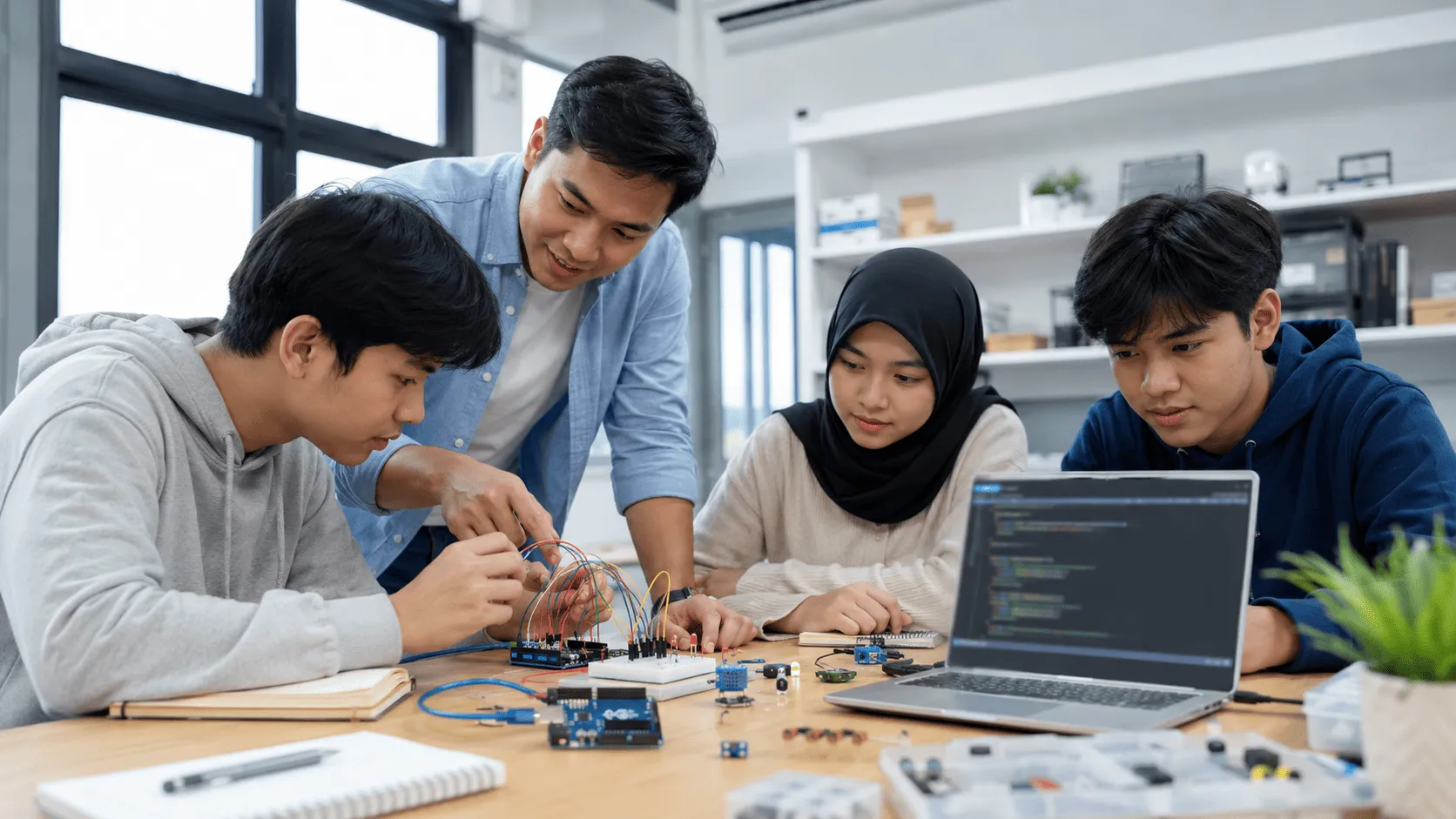
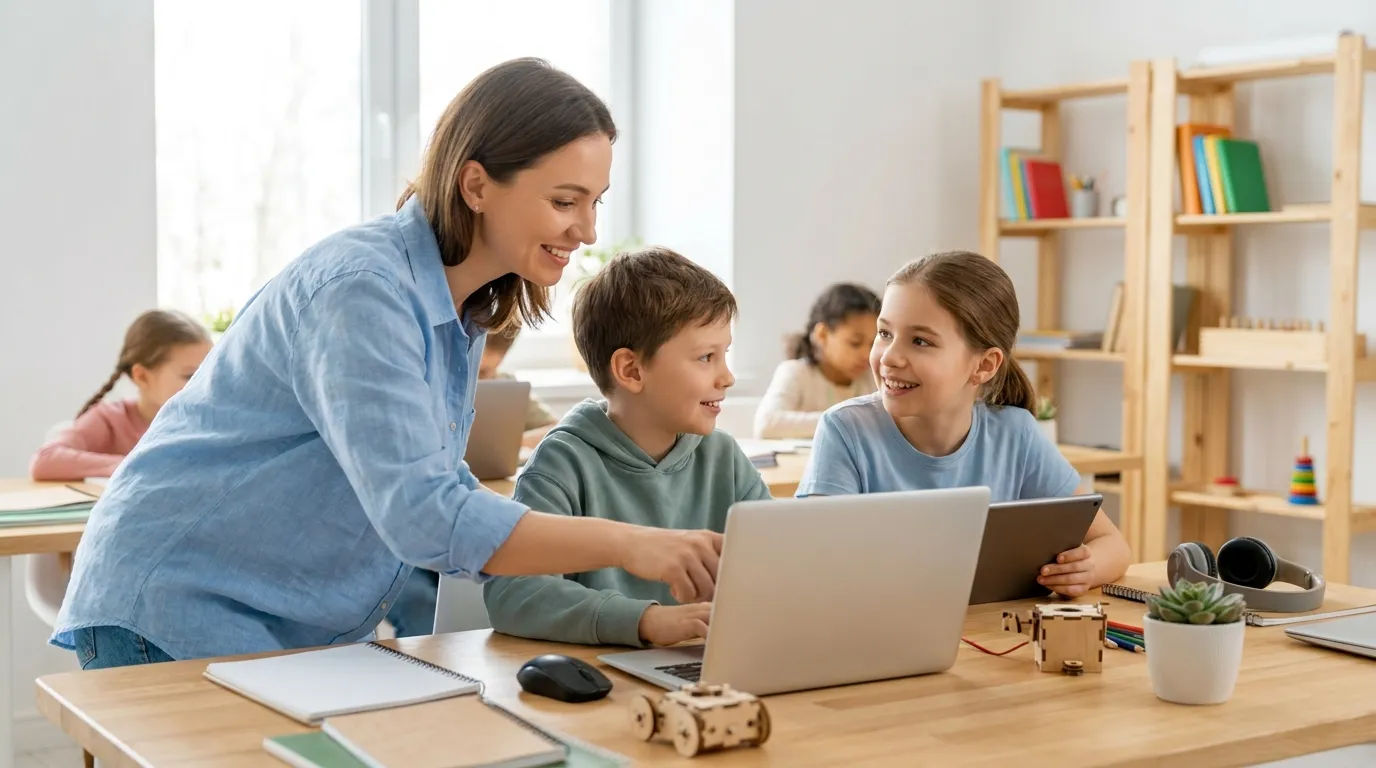
Working on robotics projects is usually not done alone, but in teams. There will be a natural division of tasks; some kids prefer to focus on the mechanical assembly, while others focus on putting the code together. It is in these moments that children learn how to express the ideas in their heads, listen to friends' input, and compromise to achieve the final result. This balance between technical hard skills and social soft skills is invaluable.
Frequently Asked Questions (FAQ)
1. Do children need to be good at math to learn robotics?
No. Learning robotics will actually help children understand mathematical concepts much more practically, such as recognizing angle logic and calculating distance.
2. At what age can children be introduced to robotics?
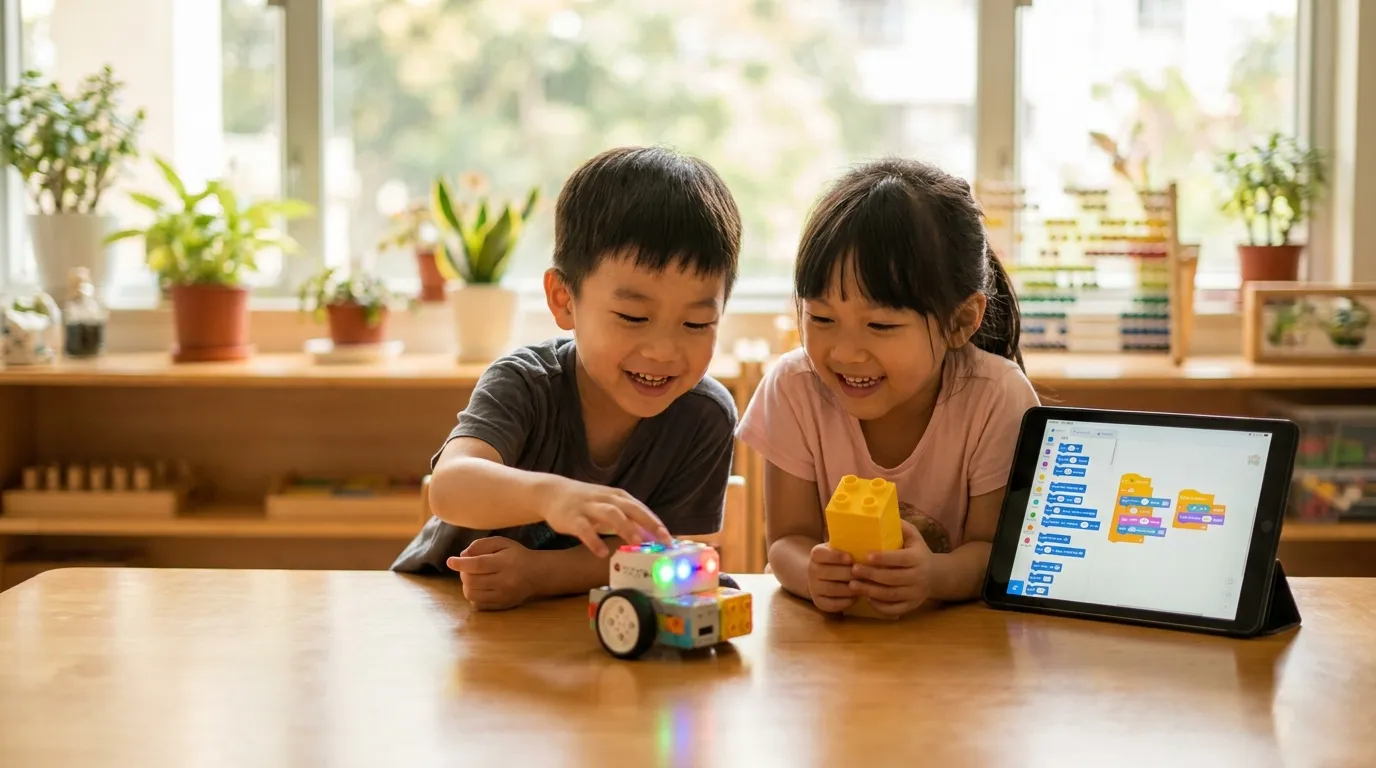
This learning can start from the age of 5 to 7 years. At this age, they will use child-friendly devices and a visual block coding system that is very simple to understand.
3. What are the long-term benefits of learning robotics?
These activities will prepare children to more easily understand future technologies (such as artificial intelligence and automation), while also building their confidence in facing complex challenges.
Instilling an interest in technology from an early age is one of the best investments for a child's future. Let's help them grow into a generation that is logically smart, resilient, and creative by taking the first step with Koding Akademi. You can explore their exciting programs at https://www.kodingakademi.id/.