Polyfunctional robots are versatile smart machines designed to perform various different tasks and seamlessly adapt across diverse industrial operations. Based on a report by research firm Gartner, which released this term in 2024, this technology is named as one of the top strategic trends for 2025. Instead of focusing solely on a single static function, these robots combine the flexibility of modular hardware with software intelligence—such as AI and machine learning—to take over and autonomously complete new tasks that their creators might never have imagined.
In reality, the world today is moving rapidly toward the era of hyperautomation. Gartner even predicts that by 2030, about 80% of humans will interact with smart robots every day. Modern industries are slowly starting to leave behind their reliance on single-purpose robots in favor of higher scalability and efficiency.
Flexibility and Its Main Drivers
The extraordinary capabilities of these robots did not appear overnight. From the 1950s era, which was purely utilized for repetitive assembly, to the 2020s decade filled with 5G-based automation, this technology was able to evolve thanks to several vital foundations:
Modular Hardware
Today's robots can switch roles very efficiently. As a real-world example, in an automotive factory, the exact same robot system can switch from welding, painting, assembling components, to conducting quality inspections just by modifying its supporting tools. Similarly, in the smart agriculture sector, a soil analysis tool can transform into a crop-harvesting machine simply through a module exchange.
Integration of Artificial Intelligence and IoT
Artificial Intelligence (AI) and Machine Learning (ML) act as the brains behind the autonomy of these machines. Together with the Internet of Things (IoT) and edge computing that can process data locally without latency, these robots can continuously learn from patterns and experiences to optimize logistics routes or detect product defects in real-time.
Evidence of Field Application
We are already starting to witness the real-world adoption of this advanced technology in various large companies on a global scale:
-
Manufacturing and Logistics: Industry giants like Tesla and FANUC are actively using polyfunctional robots to boost assembly productivity. In the logistics supply chain sector, big names like Amazon and DHL heavily rely on a fleet of autonomous robots for warehouse management, inventory sorting, and order processing to meet the surge in e-commerce transactions.
-
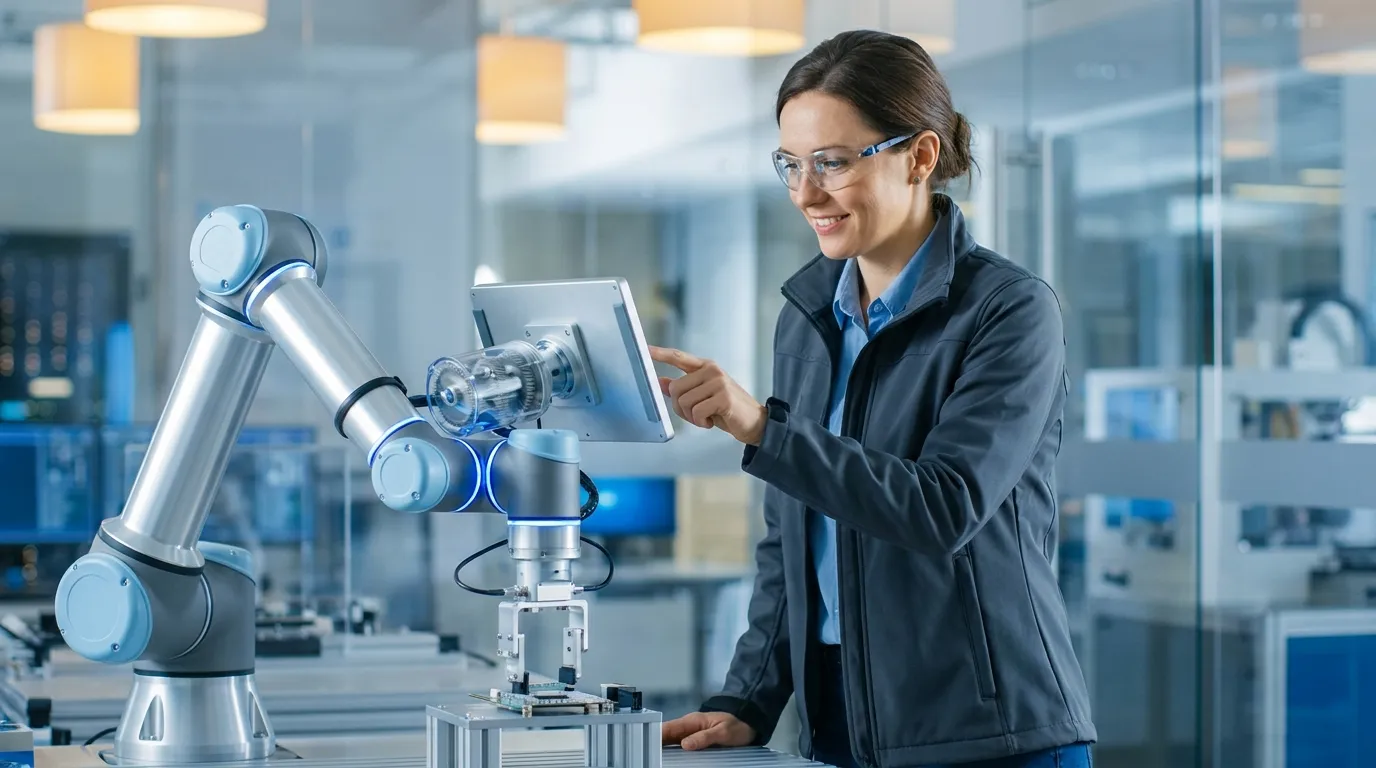
Healthcare and Public Services: Through the concept of Human-Robot Collaboration (HRC), collaborative robots (cobots) can now work safely side-by-side with nurses. In hospitals, they assist with medicine delivery, diagnostics, and room sanitation—a function whose role proved highly crucial throughout the COVID-19 pandemic.
Furthermore, the utilization of these smart systems has also expanded into the retail and banking industries, where automated bots are employed to manage transaction processing, accelerate fraud detection, and provide precise product recommendations to customers.
Frequently Asked Questions (FAQ)
1. What distinguishes polyfunctional robots from typical factory robots?
Traditional robots are generally designed for only one specific operational purpose (e.g., specifically for welding), whereas polyfunctional robots can adapt and perform various completely different tasks using the exact same base system through modules and AI.
2. Who first popularized this term?
The term "Polyfunctional Robot" was officially introduced by the independent research firm Gartner in 2024 and is projected as a dominating technology trend in 2025.
3. Is the presence of this technology aimed at replacing human workers?
No. This robotic evolution prioritizes collaboration. Its main focus is to assist human work by taking over heavy and repetitive tasks, while simultaneously reducing the risk of injury and increasing daily operational productivity.
Preparing for the Automation Era
The development of automation proves that the future of operations across various sectors will heavily rely on the synergy between humans, robotics, and artificial intelligence. Understanding the underlying technology behind it—such as programming logic and machine learning—becomes an important step so we are not left behind by the current of innovation. For those of you interested in diving deeper into the tech world, mastering programming, or wanting to understand how this smart software is built, you can start your guided learning journey with the experts at Koding Akademi.