Python is the easiest programming language for beginners — this isn't just an opinion, but a broad consensus among tech educators and the industry. But "easiest" doesn't mean it's the only right choice. Depending on your goals, there are several options worth considering.
Why Python Is the Top Choice
If you've ever googled "where to start learning coding," the answer is almost always Python. There are strong reasons behind that.
Python was designed with the philosophy that code should read like human language. Its syntax is clean, without too many curly braces, semicolons, or confusing rules. Just compare two ways of printing "Hello, World!" on screen:
Python:
print("Hello, World!")
Java:
public class Main {
    public static void main(String[] args) {
        System.out.println("Hello, World!");
    }
}
Both produce the same output. But for beginners, it's pretty clear which one makes more sense.
Python in International Curricula and Industry
Python isn't just popular among beginners. According to the Stack Overflow Developer Survey 2023, Python has been the most wanted language by developers for three consecutive years. On the academic side, universities like MIT and Stanford use Python as the introductory language in their foundational programming courses — and not without reason.
In the workforce, Python dominates data science, machine learning, and automation — three of the fastest-growing fields right now. If you start learning Python today, you're building a foundation for a career that will stay relevant for years to come.
Other Alternatives Worth Learning
Python may be the champion, but it's not the only path. The best choice still depends on what you want to build.
JavaScript for Those Who Want to Build Websites Right Away
JavaScript is the only programming language that runs directly in the browser with no installation required. You can open a browser, pull up the developer console, and start writing code immediately. Results are visible instantly — incredibly satisfying for beginners who need visual motivation.
Beyond that, JavaScript is the backbone of the modern web. Nearly every interactive website you use daily — from login forms to smooth animations — is powered by JavaScript. According to GitHub data, JavaScript has the most repositories on the platform, meaning its community and learning resources are incredibly abundant.
Scratch for Kids
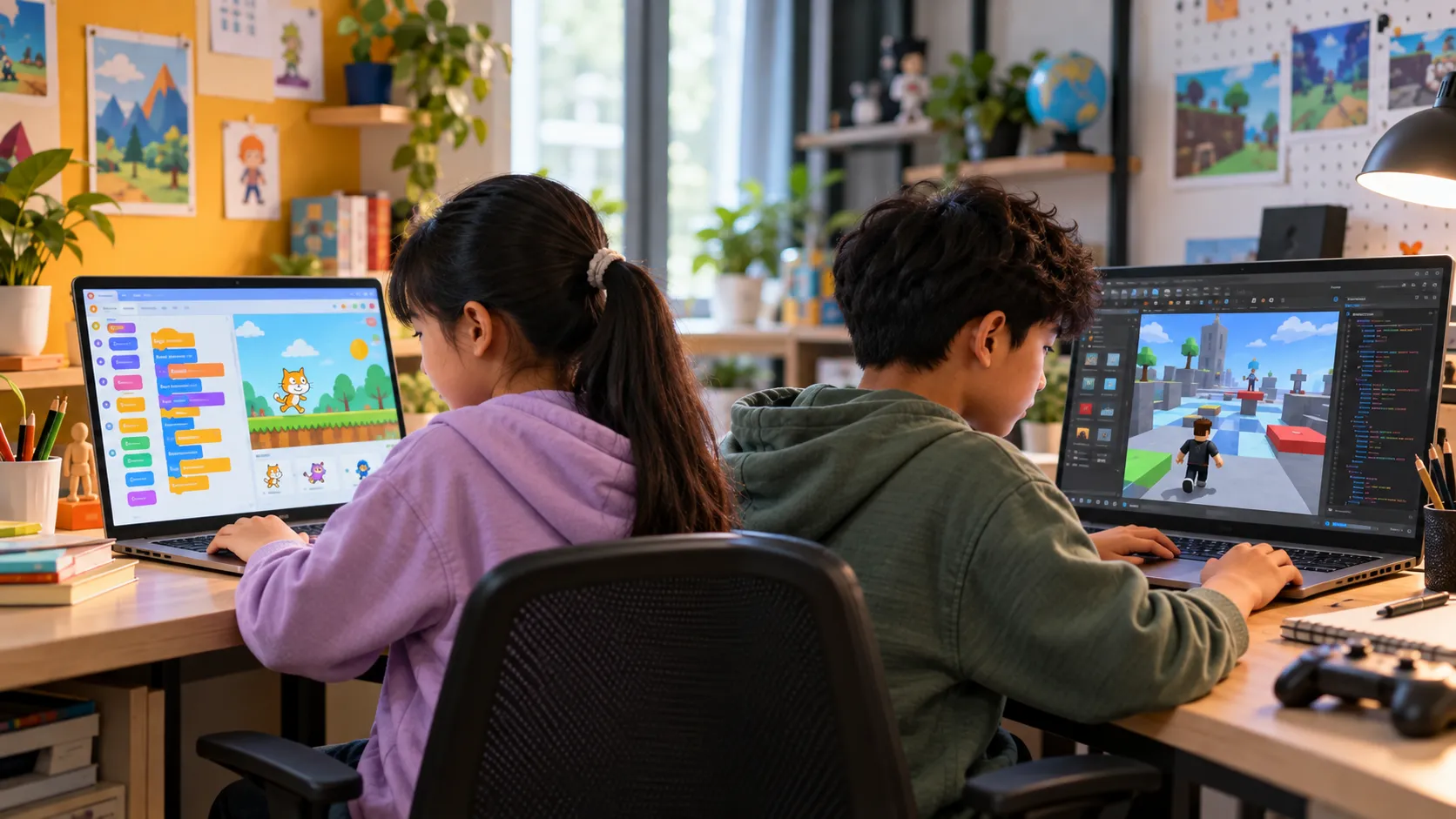
If the target learner is a child aged 8–16, MIT's Scratch is the answer. There's no typing involved — you arrange visual blocks like puzzle pieces to make characters move, build games, or create animations.
Scratch is no toy. The platform is used in more than 150 countries as a medium for introducing programming logic. Concepts like loops, conditions, and variables are taught through intuitive visuals — long before kids are ready to face text-based syntax.
HTML & CSS for the Visually Minded
Technically, HTML and CSS aren't full programming languages — they're markup and styling languages. But for beginners who want to learn how to build website layouts from scratch, they're the most welcoming and gratifying entry point. You write something, refresh the browser, and see the result immediately. Nothing beats a feedback loop that fast.
Quick Comparison: Which One Should You Pick?
| Language | Ease | Primary Use | Best For |
|---|---|---|---|
| Python | ⭐⭐⭐⭐⭐ | AI, Data, Automation | All beginners |
| JavaScript | ⭐⭐⭐⭐ | Web, Apps | Visual learners |
| Scratch | ⭐⭐⭐⭐⭐ | Games, Animation | Children |
| HTML/CSS | ⭐⭐⭐⭐ | Website Design | Design-oriented learners |
Common Traps Beginners Fall Into
Learning to code isn't about picking the "coolest" or most trending language. Two of the most common mistakes that cause beginners to quit halfway:
1. Switching languages too often. Many start with Python, move to JavaScript two weeks later, then get drawn to Rust a month after that. The result? Nothing gets mastered. Pick one, commit to at least 3 months, then reassess.
2. Diving into advanced concepts too soon. Beginners don't need to understand memory management or design patterns in their first week. Start with things you can run immediately, then gradually increase complexity.
Most importantly: consistency beats intensity. Learning 30 minutes every day is far more effective than an 8-hour marathon once a week.
FAQ: Questions Beginners Commonly Ask
Do I need to be good at math to learn coding?
Not necessarily. Most foundational programming doesn't require advanced math. Logic and problem-solving ability matter far more. Math only becomes relevant when you enter specific fields like machine learning or computer graphics.
How long does it take to learn coding from scratch?
To build a simple functional program, most beginners need about 2–3 months of consistent practice (roughly 1 hour per day). To be ready to work as a junior developer, a realistic estimate is 6–12 months with focused, deliberate practice.
Is Python still relevant in 2025 and beyond? A: Absolutely. The growth of AI and data science is actually making Python more dominant. According to LinkedIn's Jobs on the Rise report, roles requiring Python — such as data analyst and ML engineer — see increasing demand every year.
Ready to Start?
Choosing the right language is just the first step — what matters more is actually starting and staying consistent. If you need structured guidance, a clear curriculum, and a supportive community, begin your journey at Koding Akademi. Here you can learn from the basics in a practical, focused, and — most importantly — fun way.