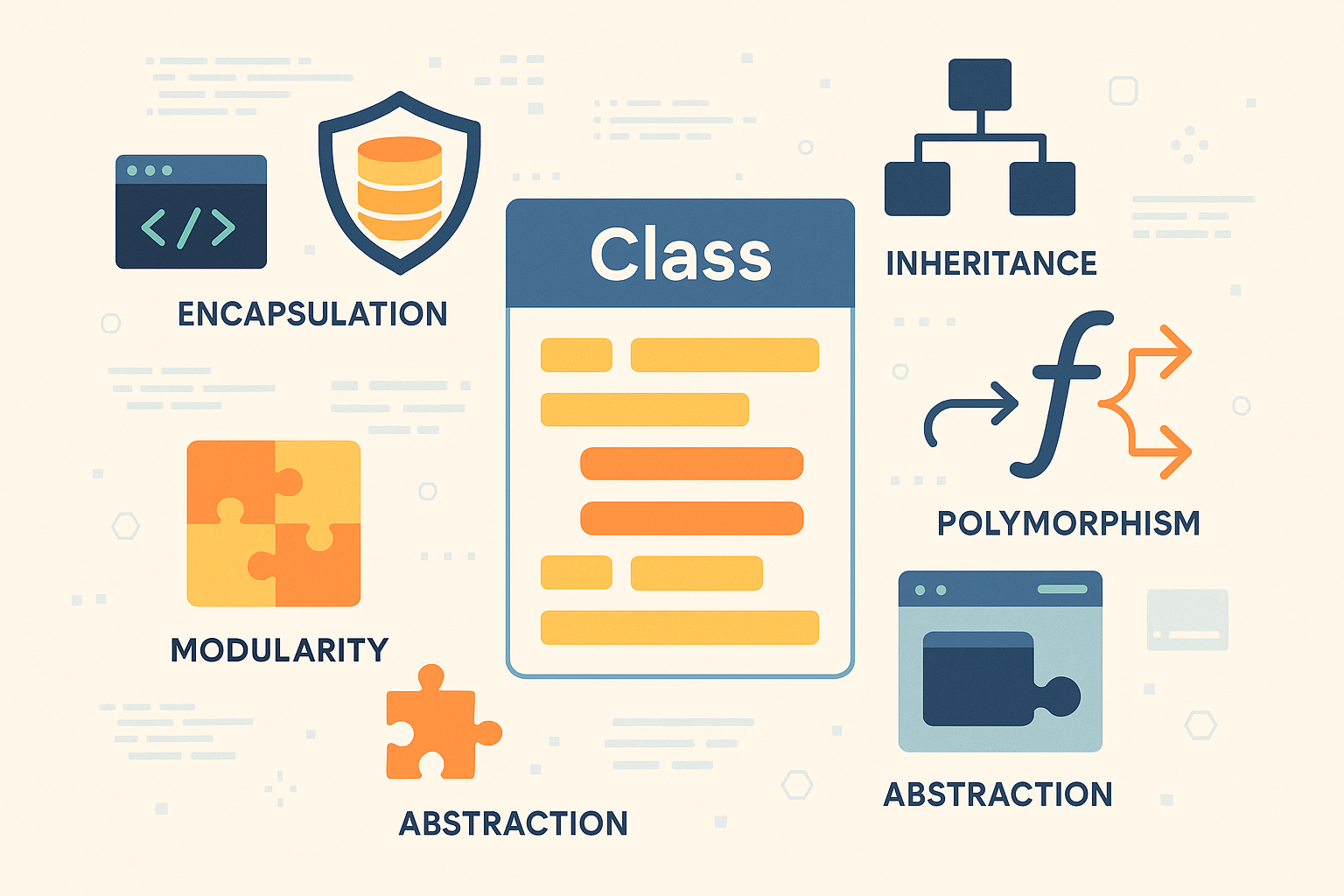
Object-Oriented Programming (OOP) is a programming paradigm that structures code into "objects" containing data (attributes) and behavior (methods). Instead of focusing solely on functions and logic like traditional procedural programming, the OOP approach directly represents real-world entities within the code. This makes it the primary standard in modern software development because it has been proven to significantly increase modularity, simplify maintenance, and enable code reusability when building complex systems.
Here is a complete guide to the concepts, benefits, and applications of OOP in the programming world.
The Benefits of Object-Oriented Programming
Why does the tech industry rely so heavily on this paradigm? Here are the main advantages of using OOP, backed by software development standards:
Modularity and Ease of Maintenance: Code is divided into separate, independent objects. According to software engineering principles (such as those outlined in the Software Engineering Body of Knowledge / SWEBOK), this modular architecture minimizes the risk of bugs because changes to one object won't break the entire system.
High Code Reusability: Classes that have been created can be reused in various parts of the program, or even ported to other projects. This practice aligns with the DRY (Don't Repeat Yourself) principle, which is highly emphasized by professional developers to save development time and costs.
Flexibility and Scalability: An organized code structure allows the system to easily adapt to changing requirements or the addition of new features. Based on historical trends from the Stack Overflow Developer Survey, languages supporting OOP consistently dominate the top positions as the most widely used technologies for building large-scale (Enterprise) applications.
6 Fundamental Concepts in OOP
To master OOP, there are six main pillars or concepts that every programmer must understand:
1. Objects as Independent Units
An object is an instance (a concrete manifestation) of a class that combines data (attributes) and behavior (methods). Each object acts as an independent entity capable of storing specific information and executing certain functions on that data.
2. Classes as Blueprints
A class serves as a blueprint or foundational template for creating objects. It is within the class that attributes and methods are generally defined, ensuring that the objects generated from that class will have a uniform structure and behavior.
3. Encapsulation for Data Security
Encapsulation is the bundling of data and methods into a single entity (the class) to restrict direct access to internal data from the outside. This protective concept ensures data security and integrity, preventing arbitrary manipulation.
4. Inheritance in Code Structure
Inheritance allows the creation of a new class (subclass) that automatically inherits the attributes and methods of its parent class (superclass). This feature is crucial for preventing repetitive code writing and accelerating the development of hierarchical systems.
5. Polymorphism in Method Behavior
Polymorphism allows the same method to exhibit different behaviors depending on the context of the object calling it. In practice, this flexible concept generally encompasses method overriding (overwriting a parent class's method) and method overloading (methods with the same name but different parameters).
6. Abstraction to Hide Complexity
Abstraction focuses on simplifying system complexity by hiding intricate internal implementation details. Users or other parts of the program are only presented with the essential features (interfaces) genuinely needed to interact with the object.
Programming Languages That Support OOP
Today, the majority of modern programming languages are designed to be object-oriented. Some popular languages that widely utilize the OOP paradigm in the industry include:
Java: The industry standard for enterprise applications and Android development.
C++: Massively used for game development and high-performance systems.
Python: Highly popular in data science, artificial intelligence, and web development.
C#: The primary language in the Microsoft ecosystem and the Unity game engine.
Ruby: Famous for the Ruby on Rails framework, which accelerates web startup creation.
Frequently Asked Questions (FAQ)
1. What is the main difference between a Class and an Object in OOP?
A class is a conceptual design or blueprint, whereas an object is the concrete realization (instance) created based on that blueprint, possessing its own data.
2. Why is the concept of Encapsulation so important in application development?
Encapsulation is important because it prevents outside parties (or other parts of the code) from directly accessing and altering sensitive data. This prevents unintended bugs and maintains the security of the program's workflow.
3. Should beginners learning to code study OOP right away?
Beginners are advised to understand basic logic (such as variables, loops, and control structures) first. However, once those basics are mastered, learning OOP is mandatory because almost all tech companies today require this skill for software development.
Conclusion
Object-Oriented Programming (OOP) is the most efficient and effective approach in modern software engineering. By utilizing encapsulation, inheritance, polymorphism, and abstraction, the systems built become much neater, scalable, and easier to manage in the long run. Understanding OOP is no longer just an option; it is an absolute foundation for anyone wanting a career as a professional developer.
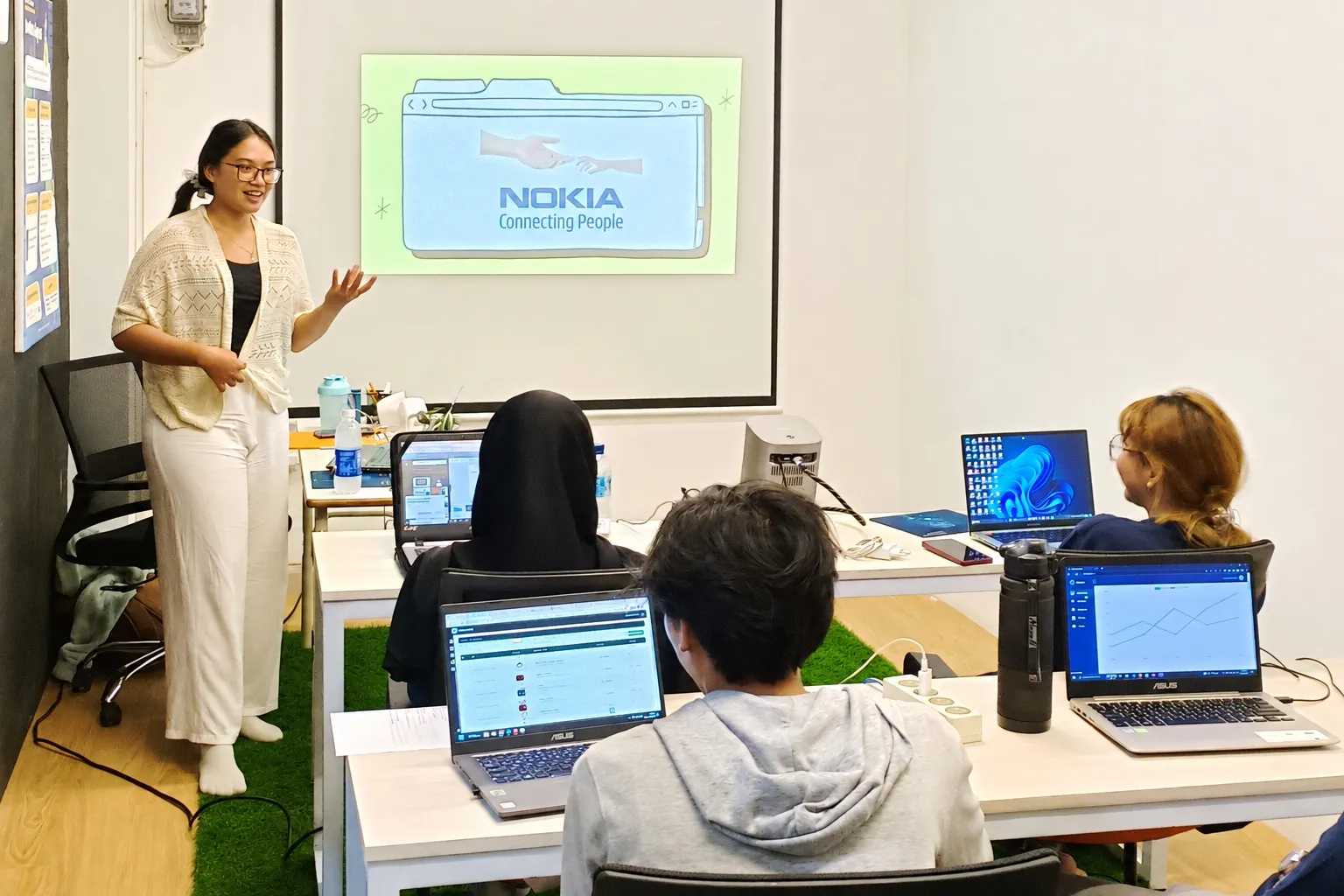
Do you want to dive deeper into coding concepts and master OOP practically? Join Koding Akademi and start your journey to becoming a reliable programmer today! Enjoy learning with a structured curriculum, direct guidance from professional mentors, and a supportive learning community.
Register now and make your dreams in the tech world a reality by visiting https://www.kodingakademi.id/.