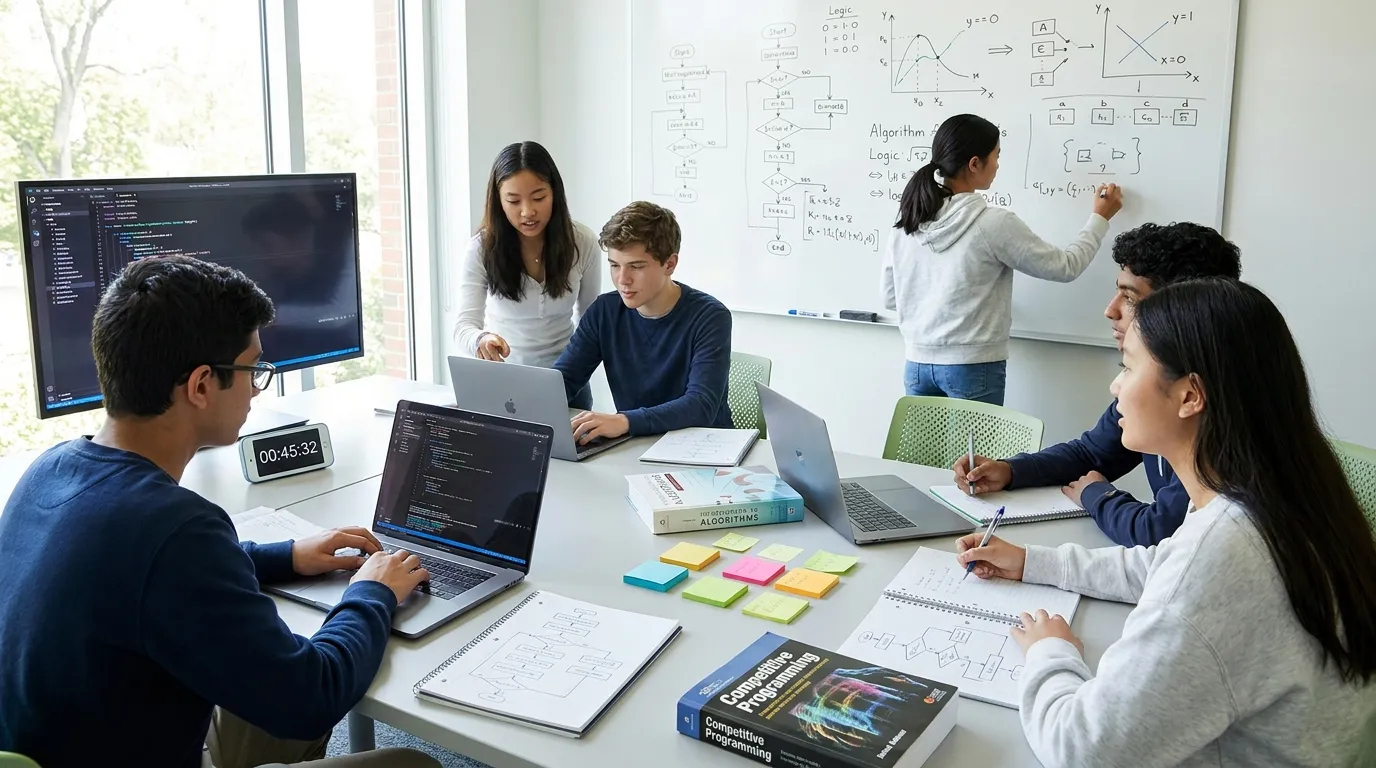
The Informatics Olympiad is an academic competition that challenges students' logic, algorithms, and programming skills. For many students, this event is more than just chasing medals—it is an investment in developing critical thinking and problem-solving skills that are highly valuable for the future.
Here are the strategic steps to prepare yourself for the Informatics Olympiad:
1. Understanding Basic Algorithms and Logic
The most crucial first step is strengthening your logical foundation. An algorithm is a systematic sequence of steps to solve a problem. Core concepts that must be mastered include:
Branching (if-else): Decision-making logic.
Looping: Executing instructions repeatedly and efficiently.
Arrays & Data Structures: Methods for storing and managing simple data.
Sorting & Searching: Fundamental techniques for organizing and finding data.
2. Mastering a Programming Language
Students need to deeply master at least one programming language to write solutions quickly and efficiently. Commonly used languages in competitions include:
C++: The most popular choice due to its speed and comprehensive library support.
Python: Ideal for beginners because of its simple syntax.
Java: Frequently used in various advanced-level olympiad platforms.
3. Consistent Practice (Problem Solving)
Practice is the ultimate key. The more types of problems you encounter, the sharper your logical instincts will become. Some effective practice tips:
Solve at least one algorithm problem every day.
Study solutions from previous years' problems.
Use online judges or coding practice platforms.
Actively discuss with communities or mentors.
4. Learning Advanced Data Structures
For higher competition levels (such as provincial or national stages), mastery of advanced material is required, such as:
Graphs & Trees: Structures for modeling relationships between objects.
Dynamic Programming (DP): A technique for breaking large problems into smaller sub-problems.
Greedy Algorithm: A strategy of making the best possible decision at each step.
5. Participating in Competitions and Simulations
Simulations are vital for training mental endurance and time management. By participating in simulations, students can experience actual time pressure and evaluate which areas still need improvement before the competition day arrives.
Frequently Asked Questions (FAQ)
What is the best programming language for beginners in the olympiad? C++ is highly recommended because of its incredibly fast execution and its status as the primary standard in almost all International Olympiads in Informatics (IOI).
Do I have to be good at math to join this olympiad? Mathematical logic skills are very helpful, especially in combinatorics and number theory. However, the main focus of this olympiad is on algorithmic logic and code efficiency.
Where can I practice olympiad problems for free? You can use platforms like TLX (Toki Learning), Codeforces, or LeetCode, which provide thousands of programming challenges ranging from easy to difficult.
How much time is needed for preparation? Ideally, preparation should be done consistently for at least 6 months to 1 year to truly master complex algorithms and advanced data structures.
Ready to Become the Next Informatics Champion?
Thorough preparation is the key to success. If you want more intensive and structured guidance with an international-standard curriculum, consult your learning needs at Koding Akademi. Start your competitive journey now!