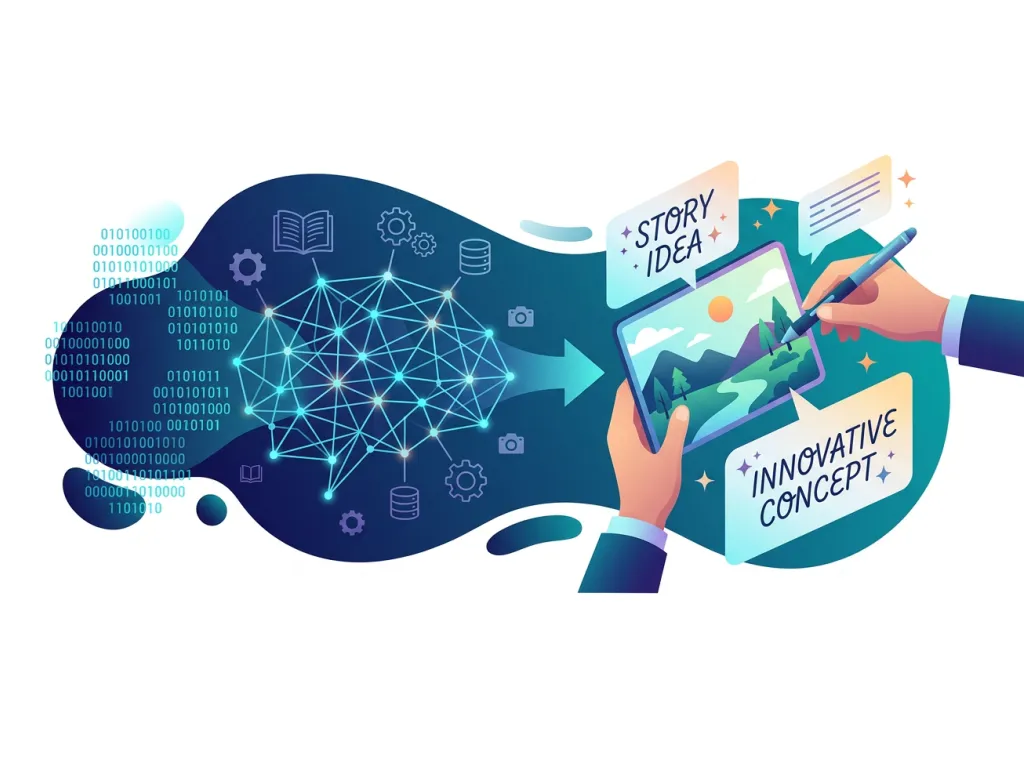
Generative AI creates new text and images by predicting data sequences based on statistical patterns learned from millions of human-made examples. Rather than simply copying, this technology uses deep learning algorithms to arrange elements—whether words or pixels—step-by-step into original and coherent works.
Understanding How AI Processes Data
The creative process of AI actually begins with numbers and probabilities. Before it can write poetry or paint a landscape, an AI must undergo an intensive "learning" phase.
Training Models with Massive Data Scales
The first step is training. For text, the AI "reads" billions of sentences from books, articles, and programming code. For images, the model studies millions of image-text pairs. The goal isn't memorization, but rather understanding the relationships between elements—such as how the word "cloud" often appears with "sky," or how shadows form when light is present.
The Role of Deep Learning as a Digital Brain
This is where deep learning technology comes in. Using complex architectures like Transformers (for text) or Diffusion Models (for images), AI maps these intricate patterns into artificial neural networks. This allows the AI to understand context and style, rather than just matching keywords.
The Creation Process of Unique Text and Visuals
Once the AI becomes "smart" through training, it is ready to receive prompts from users to produce something new.
Natural-Sounding Word Prediction
In text AI, this process is known as next-token prediction. The AI looks at the sentence currently being formed and calculates which word makes the most sense to appear next based on the context. Because of its ability to process thousands of parameters, the resulting sentences feel fluid, logical, and very similar to human writing.
Constructing Visual Elements from Noise
For images, the process is quite unique, especially in diffusion models. The AI starts with a cluster of random dots (noise) and gradually "cleans" those dots based on the requested pattern. Imagine a sculptor looking at a rough block of marble and slowly removing the unnecessary parts until a beautiful statue is formed.
Innovation and Relevance in the Digital Era
The capability of generative AI is not just a trend; it is an efficiency solution across various industries.
Ideation and Design Efficiency: Designers can now generate visual drafts in seconds to speed up the brainstorming process.
Future Skill Requirements: According to the World Economic Forum, the ability to work alongside AI and digital literacy are among the top skills most needed in the global job market by 2025 and beyond.
New Literacy Standards: Understanding how AI works is now becoming part of international standard technology curricula to prepare the younger generation for automation.
Frequently Asked Questions (FAQ)
1. Does generative AI truly create something new? Yes, AI combines learned patterns to create unique combinations that never existed in the training data, making the output an original creation rather than a raw copy or plagiarism.
2. Why does AI sometimes provide incorrect information (hallucinations)? Because AI works based on the statistical probability of words, not an actual understanding of real-world facts. If the data patterns aren't strong enough, the AI might predict a word that sounds grammatically correct but is factually wrong.
3. What is the main difference between generative AI and traditional AI? Traditional AI is generally used to analyze or classify data (like spam filters), while generative AI focuses on creating or producing new content that resembles human creation.
The world of technology is moving fast, and understanding the "how-to" behind the AI screen is the first step to mastering it. If you want to be more than just a user and become a creator behind the technology of the future, let’s start sharpening your creativity and logic through exciting coding and robotics classes at