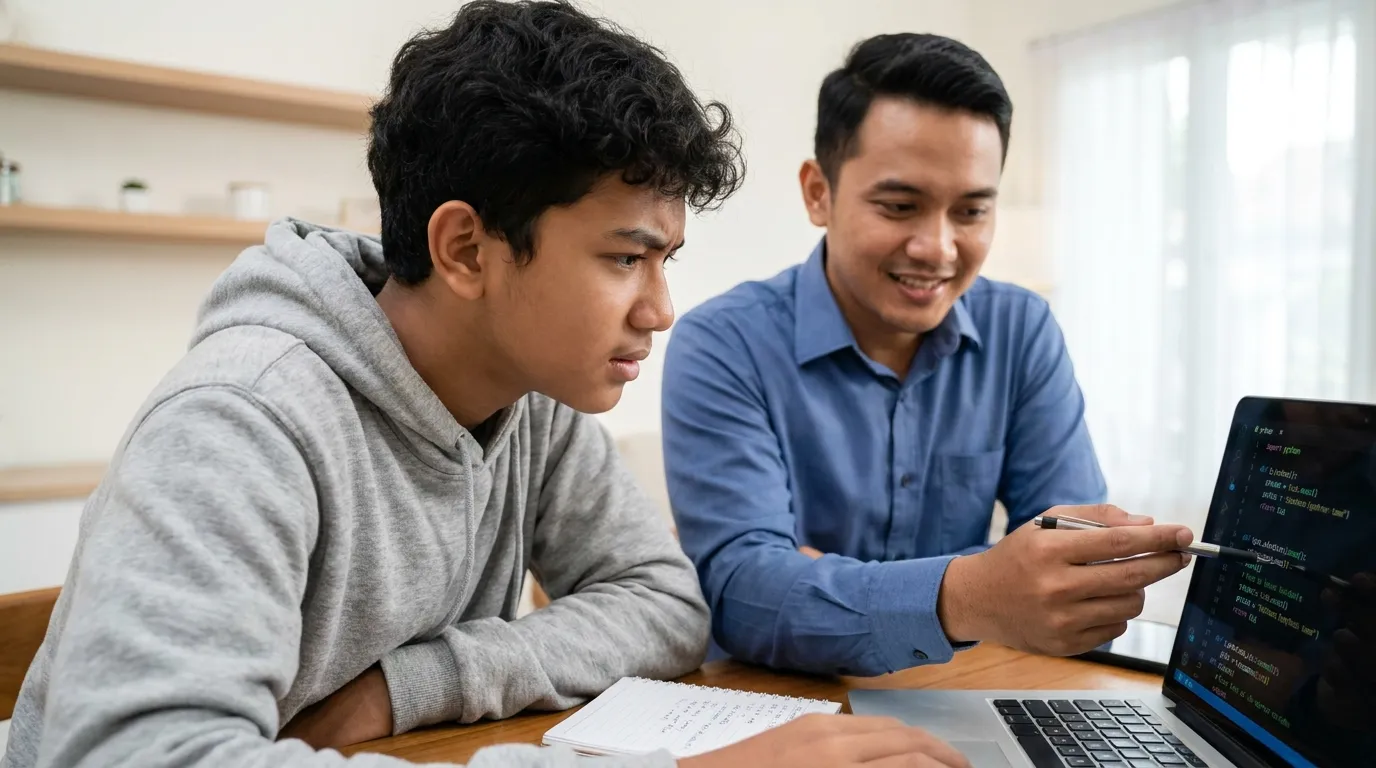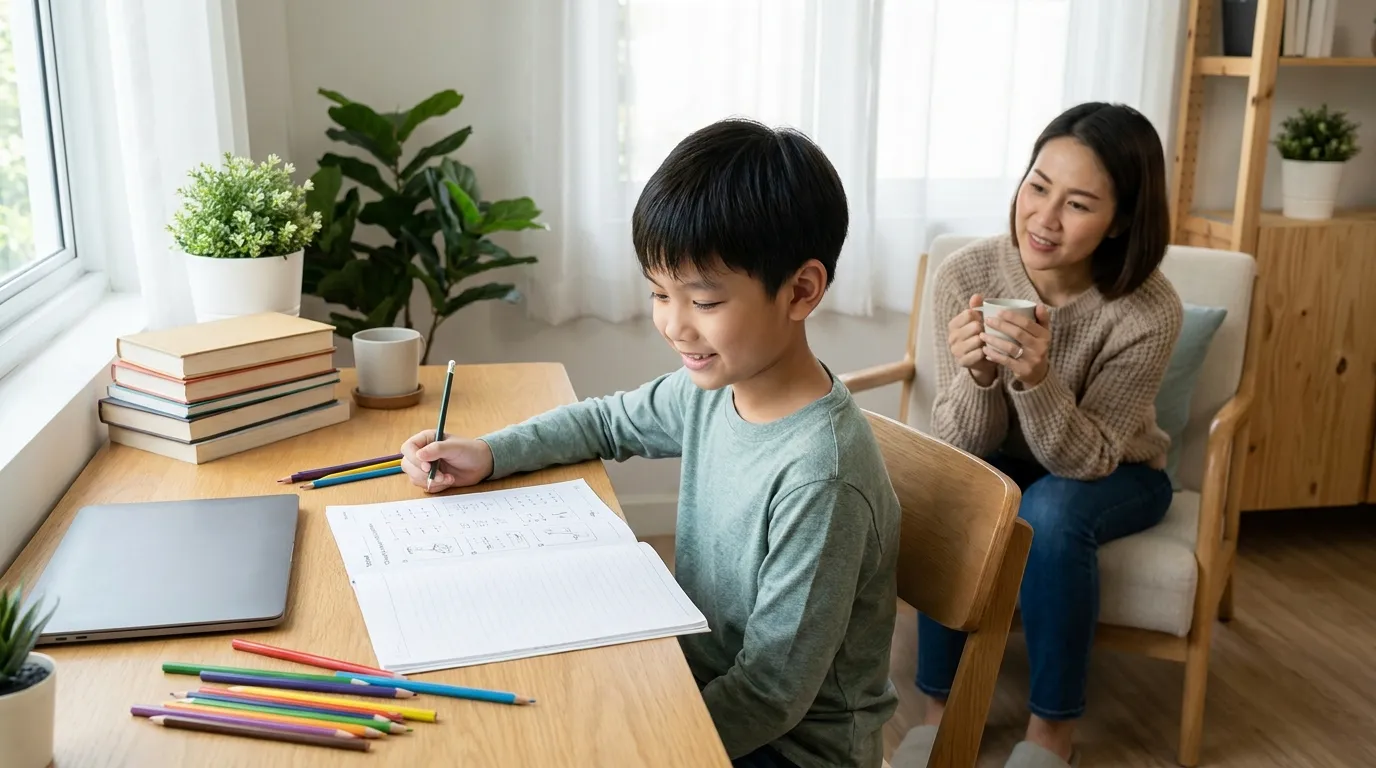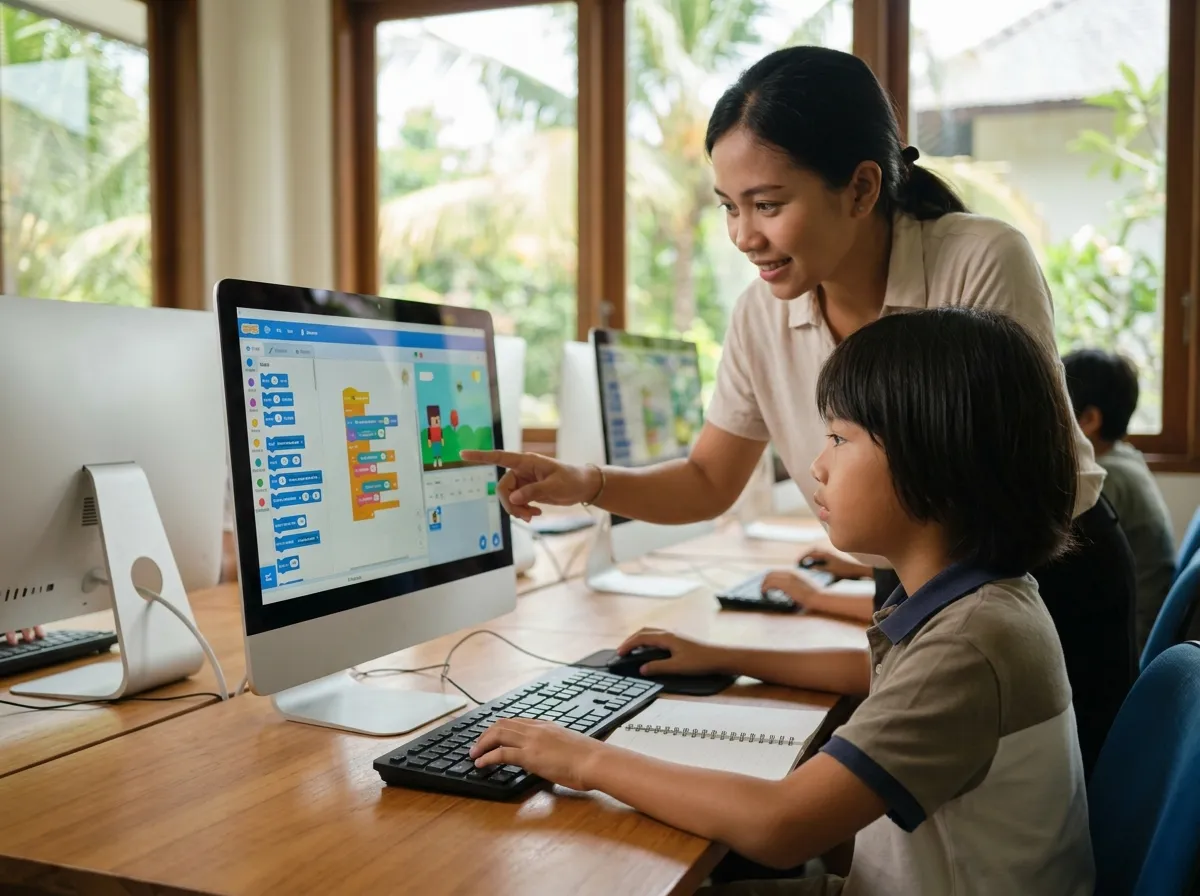
Yes, AI can support children’s creativity, curiosity, and self-confidence when it is used as a learning aid, not as a replacement for teachers, parents, or the child’s own thinking process. A number of educational guidelines and studies show that AI can help provide initial explanations, extra practice, quick feedback, and ideas for creative work; however, its benefits are strongest when combined with guidance, fact-checking, and critical thinking habits.
Why AI Is Relevant to Children’s Learning Process
Simpler initial explanations help children engage with the material
One of the clearest benefits of AI is its ability to simplify explanations. A report from the U.S. Department of Education states that AI has the potential to support more personalized learning, including providing explanations, examples, and feedback tailored to students’ needs. UNESCO also notes that generative AI can support learning when used responsibly and kept under human supervision.
This means that when a child feels a particular subject is too difficult, AI can serve as an “initial bridge” before they discuss it further with a teacher or parent. This does not mean AI is always correct, but it can help children gain a basic understanding that makes it easier for them to ask follow-up questions.
Quick responses can trigger follow-up questions from children
In the theory of interest development, relevant and easy-to-understand initial triggers can create “situational interest,” which may later develop into deeper curiosity [3]. When children receive quick initial answers, they are often encouraged to ask follow-up questions such as “Why does that happen?” or “How does it work?”
This is where AI can be useful: not because it replaces the process of asking questions, but because it speeds up access to early learning triggers. In other words, AI can help open the door to curiosity, while deeper exploration should still be guided by adults and trusted sources.
How AI Supports Children’s Creativity
AI can spark ideas, not replace imagination
AI can help children find inspiration for writing stories, creating poems, designing simple experiments, or thinking through ideas for small projects. Research published in Science Advances shows that generative AI can enhance individual creativity in certain writing tasks, although there is also a risk that outputs become more uniform if users rely too heavily on machine suggestions.
This finding is important: AI is most useful when it is used to open up possibilities, not to determine the entire final result. Children still need to choose ideas, evaluate which ones are interesting, and add their own personal perspective. UNESCO also emphasizes the importance of preserving human agency so that technology does not replace individual judgment and expression.
Step-by-step support makes small projects easier for children
In addition to generating ideas, AI can also help break large tasks into smaller steps. In education, this ability is known as scaffolding, which refers to structured support that helps children complete tasks that initially feel difficult [2]. For example, a child who wants to write a short story can be guided step by step in developing characters, conflict, setting, and then the ending.
This kind of gradual approach is supported in many educational practices because it helps children avoid giving up too quickly when facing complex tasks. However, the final result should still come from the child’s own decisions so that their creative process continues to grow.
How AI Can Build Children’s Confidence
Quick feedback helps children feel their progress
Self-confidence in learning often grows from successful experiences. According to Albert Bandura’s theory of self-efficacy, mastery experiences are the strongest source for building the belief that a person is capable of completing a task [5]. When children understand material that once felt difficult, then successfully answer questions or complete assignments, a sense of “I can do it” begins to form.
AI can support this process by providing extra practice and fast feedback, so children do not have to wait long to find out where they went wrong or how to improve. However, that feedback still needs to be checked, because AI systems can sometimes provide inaccurate answers.
Practice at the right level can improve learning outcomes
Stronger evidence comes from research on intelligent tutoring systems, which are AI-based learning systems designed to provide more personalized practice and guidance. A meta-analysis by Ma and colleagues found that intelligent tutoring systems generally produced better learning outcomes than certain forms of conventional instruction, largely because of their more individualized support.
When children practice at a level that matches their needs, they are more likely to experience small successes. These small successes gradually strengthen their academic self-confidence.
The Role of Parents and Teachers Remains Irreplaceable
Guidance is necessary because AI can be wrong or biased
Although useful, AI is not always an accurate source. UNESCO warns that generative AI can produce factual errors, bias, or answers that sound convincing even when they are incorrect. For this reason, children still need to be taught to verify information and compare it with books, teachers, or official sources.
Parental and teacher guidance is essential so that children do not accept every AI response at face value. In best practice, AI should be positioned as a discussion tool, not as the “final authority.”
Critical thinking and digital safety habits should be built early
UNICEF emphasizes that the use of AI for children should prioritize the best interests of the child, including safety, privacy, and the right to develop in a healthy way. This means parents need to help children understand that not all digital information can be trusted immediately, and not all personal data is safe to share on technology platforms.
In this way, the benefits of AI can be enjoyed without compromising children’s digital safety. The best approach is not to ban it entirely, but to introduce safe, critical, and age-appropriate use.
Frequently Asked Questions
1. Is AI safe for children to use?
AI can be safe when used under the supervision of parents or teachers, on age-appropriate platforms, and not for sharing personal data carelessly. UNESCO and UNICEF both stress the importance of supervision, accuracy, and child protection in AI use.
2. Does AI make children lazy thinkers?
Not always. AI can actually be helpful when used to understand concepts, find initial ideas, or practice questions. The risk appears when children only copy answers without understanding the process, which is why guidance and the habit of asking questions remain important.
3. Can AI replace teachers and parents?
No. AI can help by providing explanations, practice, and inspiration, but it cannot replace the role of teachers and parents in guiding children, assessing them, understanding their emotions, and building character.
Closing
AI can be a tool that helps children learn more bravely, become more curious, and grow more creative, as long as it is used wisely and with warm guidance. When children use technology to ask questions, try new things, correct mistakes, and create their own work, AI does not weaken their abilities. Instead, it can strengthen their growth process.
If you want children not only to use technology but also to understand how to create it, now is the time to start learning coding through a structured program at https://www.kodingakademi.id/.
References
UNESCO. (2023). Guidance for generative AI in education and research:
https://unesdoc.unesco.org/ark:/48223/pf0000386693
U.S. Department of Education, Office of Educational Technology. (2023). Artificial Intelligence and the Future of Teaching and Learning: Insights and Recommendations.
https://www.ed.gov/sites/ed/files/documents/ai-report/ai-report.pdf
Hidi, S., & Renninger, K. A. (2006). The Four-Phase Model of Interest Development. Educational Psychologist, 41(2), 111–127:
https://psycnet.apa.org/record/2006-06011-004
Doshi, A. R., & Hauser, O. P. (2024). Generative AI enhances individual creativity but reduces the collective diversity of novel content. Science Advances, 10(7):
https://www.science.org/doi/10.1126/sciadv.adn5290
Bandura, A. (1997). Self-Efficacy: The Exercise of Control. W. H. Freeman:
https://psycnet.apa.org/record/1997-08589-000
Ma, W., Adesope, O. O., Nesbit, J. C., & Liu, Q. (2014). Intelligent Tutoring Systems and Learning Outcomes: A Meta-Analysis. Journal of Educational Psychology, 106(4), 901–918:
https://psycnet.apa.org/record/2014-25074-001
UNICEF. (2021). Policy Guidance on AI for Children: