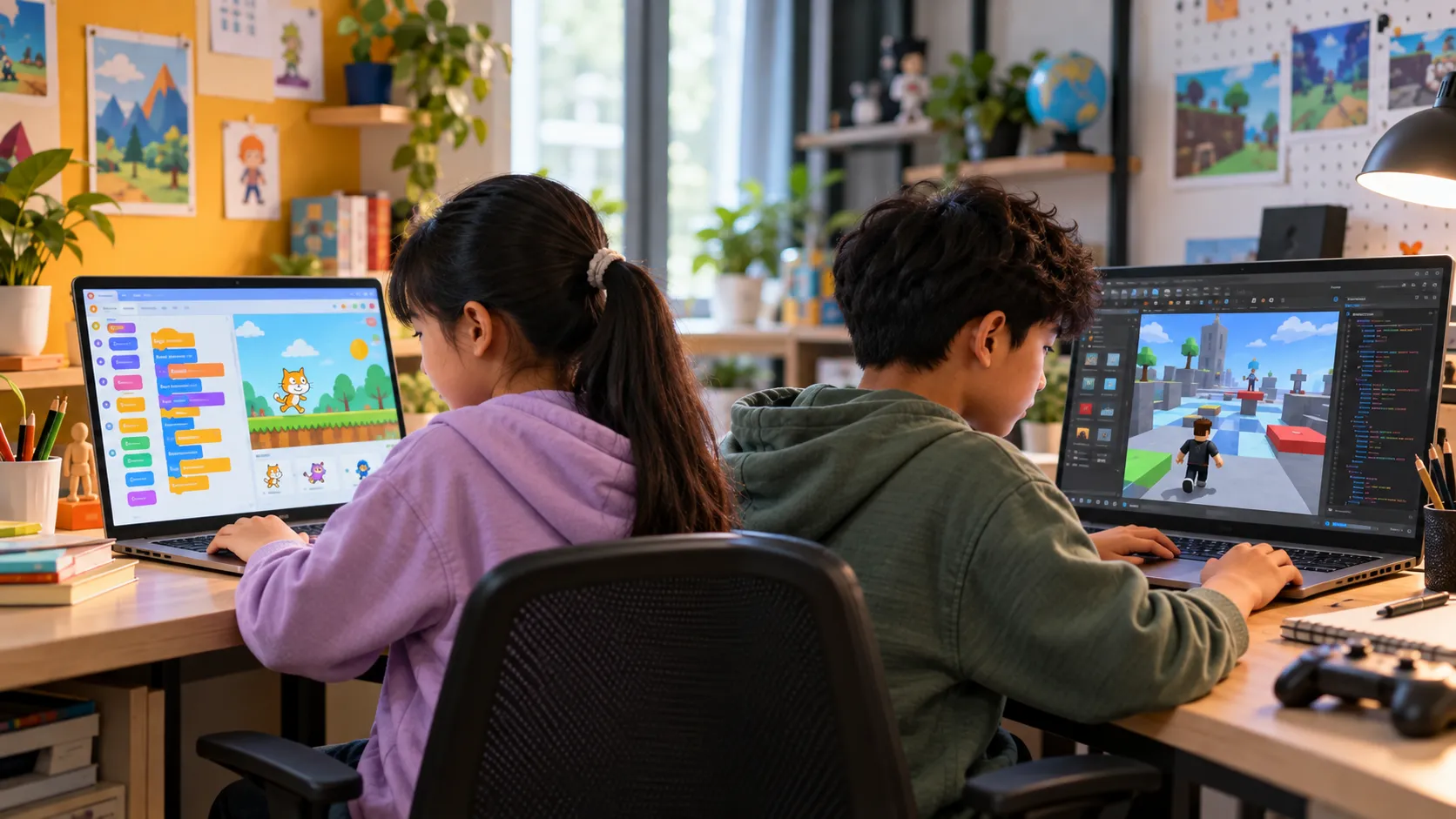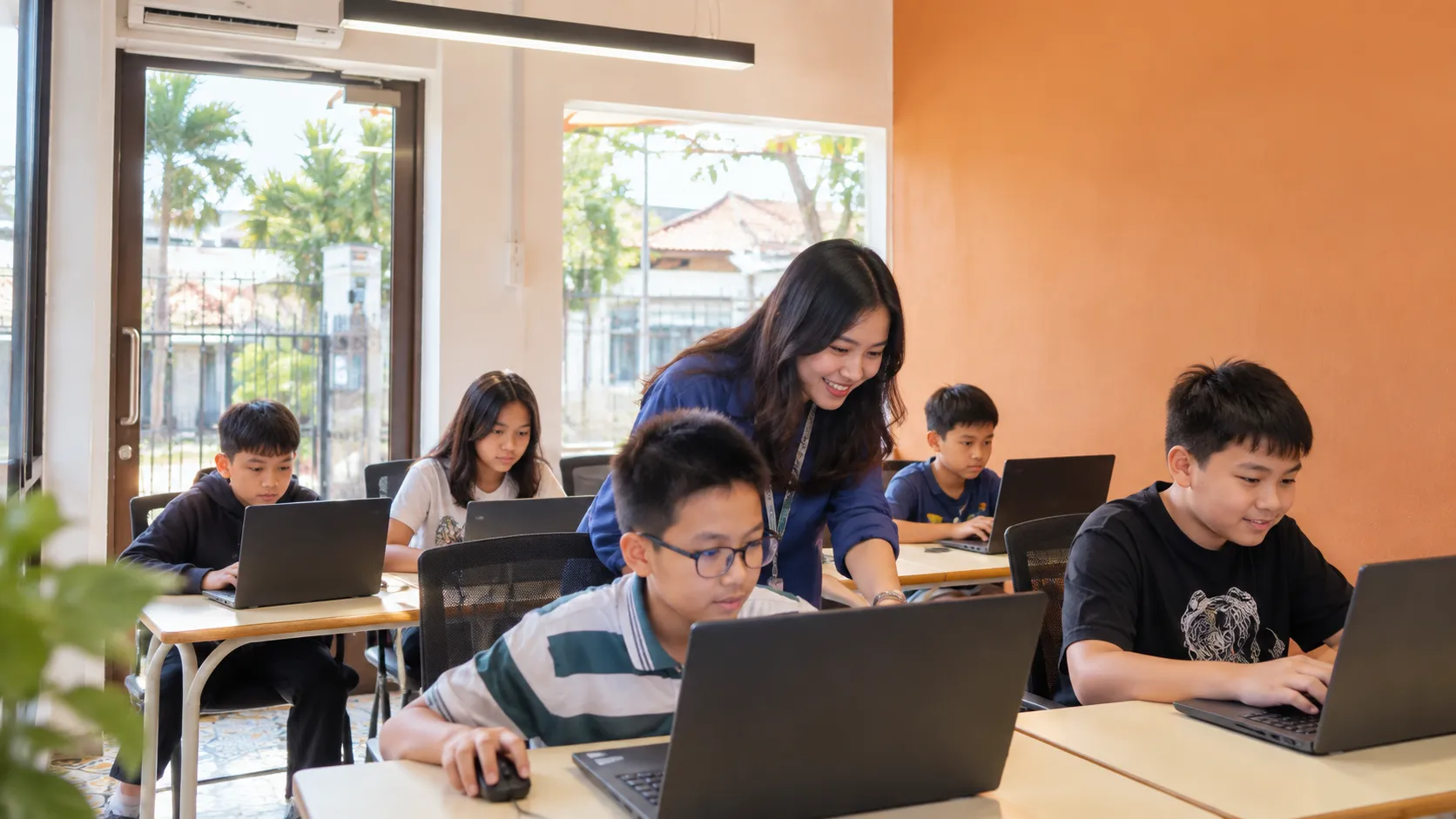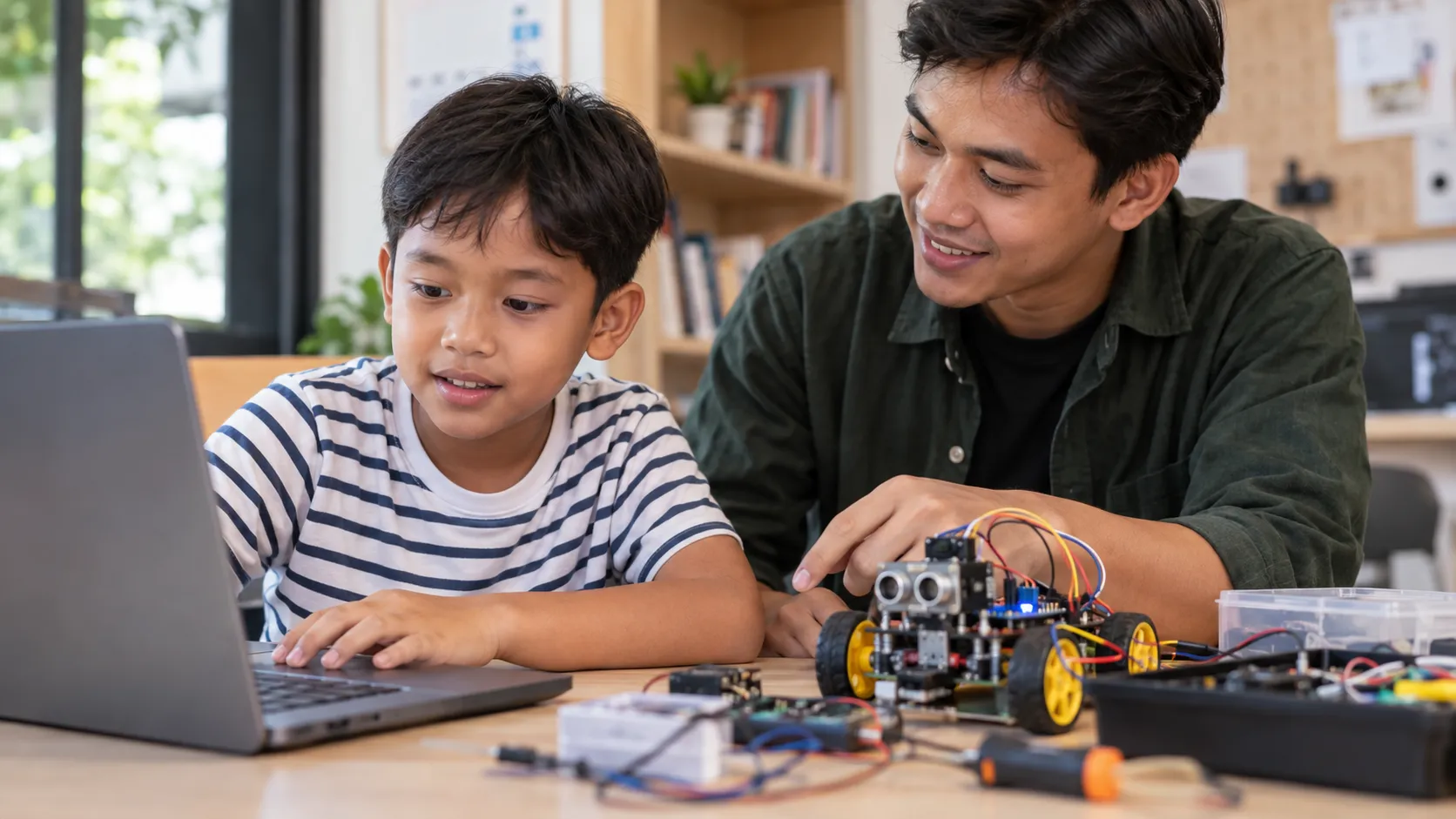
Learning coding trains children to think systematically, logically, and creatively. Its benefits go beyond becoming a programmer: coding stimulates the brain through the interplay of logic and creativity, computational thinking, resilience, mathematics and language skills, and the shift from passive consumers to digital creators.
In the digital age, coding is no longer a skill reserved for IT specialists. It has become a “new literacy” increasingly introduced from an early age. Many parents ask why children need coding if they may never become programmers. The answer lies in the learning process.
Engaging Logic and Creativity Together
Coding involves analytical and creative thinking at the same time.
Logic and Analysis
Children use logical thinking to understand programming languages, organize algorithms, and find errors in lines of code through debugging.
Creativity and Design
Creative thinking comes into play when children design game storylines, choose visual colors, and create animated characters.
The combination of logic and imagination gives children opportunities to practice different thinking skills as they develop.
Developing Problem-Solving and Computational Thinking
Coding introduces children to computational thinking. This approach teaches them to use:
- Decomposition: Breaking a large, complex problem into smaller parts that are easier to solve.
- Pattern Recognition: Identifying similarities with problems they have encountered before.
- Abstraction: Focusing on important information and setting aside irrelevant details.
- Algorithms: Organizing steps toward a solution systematically.
These skills are useful beyond the computer. They can also help children solve everyday problems and tackle schoolwork.
Building Resilience Through Debugging
Errors are normal in coding. When a program does not work as expected, children are encouraged to debug it—to find and correct mistakes—instead of giving up.
The process of trying, failing, and improving gives children practice in resilience and a growth mindset. They learn to view failure as part of finding a solution, rather than the end of the process.
Practicing Mathematics and Language Skills Naturally
Mathematics can seem boring or intimidating. Through coding, abstract mathematical concepts can become visual and engaging.
Making Mathematics More Concrete
Children work with coordinates (x, y), mathematical logic (AND, OR, NOT), variables, and geometry as they move characters on screen.
Language Through Code Structure and Rules
Coding has its own syntax and rules. Learning coding gives children practice in understanding formal structures and logically ordered communication.
Helping Children Become Creators
Children today are familiar with digital devices. However, many spend much of their time consuming content, such as watching videos or playing games made by others.
Learning coding allows them to become creators. They can make their own games, design animations, or build simple websites. Completing these projects can give them a sense of accomplishment and confidence.
When Can Children Start Learning Coding?
Children can be introduced to coding at ages 5–7 using visual platforms such as ScratchJr or Blockly. At this stage, they arrange instruction blocks like puzzles or Lego rather than type complex code.
As they grow, they can gradually move on to text-based programming languages such as Python or JavaScript.
Frequently Asked Questions (FAQ)
Do children need to become programmers for coding to be useful?
No. The benefits lie in the learning process: practicing systematic, logical, and creative thinking, alongside critical thinking, resilience, and problem-solving.
What is computational thinking in coding?
Computational thinking includes decomposition, pattern recognition, abstraction, and algorithms. These skills help children tackle everyday problems and schoolwork, as well as work on computers.
At what age can coding be introduced?
Children can begin at ages 5–7 with visual platforms such as ScratchJr or Blockly. Later, they can progress to text-based languages such as Python or JavaScript.
Coding as an Investment in Your Child's Future
Learning coding goes beyond preparation for a technology career. It offers opportunities to practice critical thinking, creativity, resilience, and problem-solving. In an increasingly changing world, helping children learn coding can be a valuable way for parents to support their development and potential.
Want to introduce coding to your child with an appropriate approach? Learn more with us at Koding Akademi and explore our learning materials.