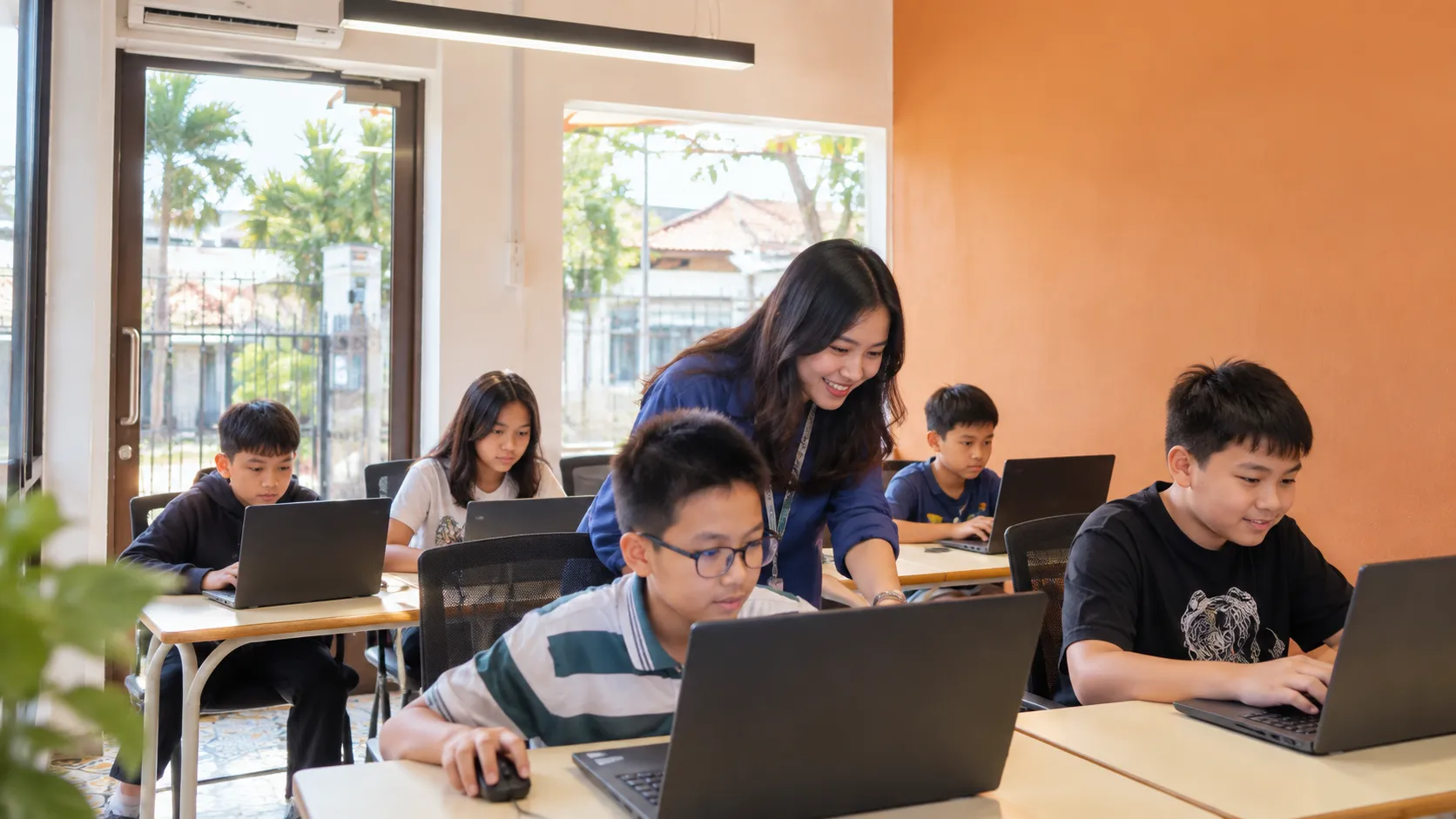
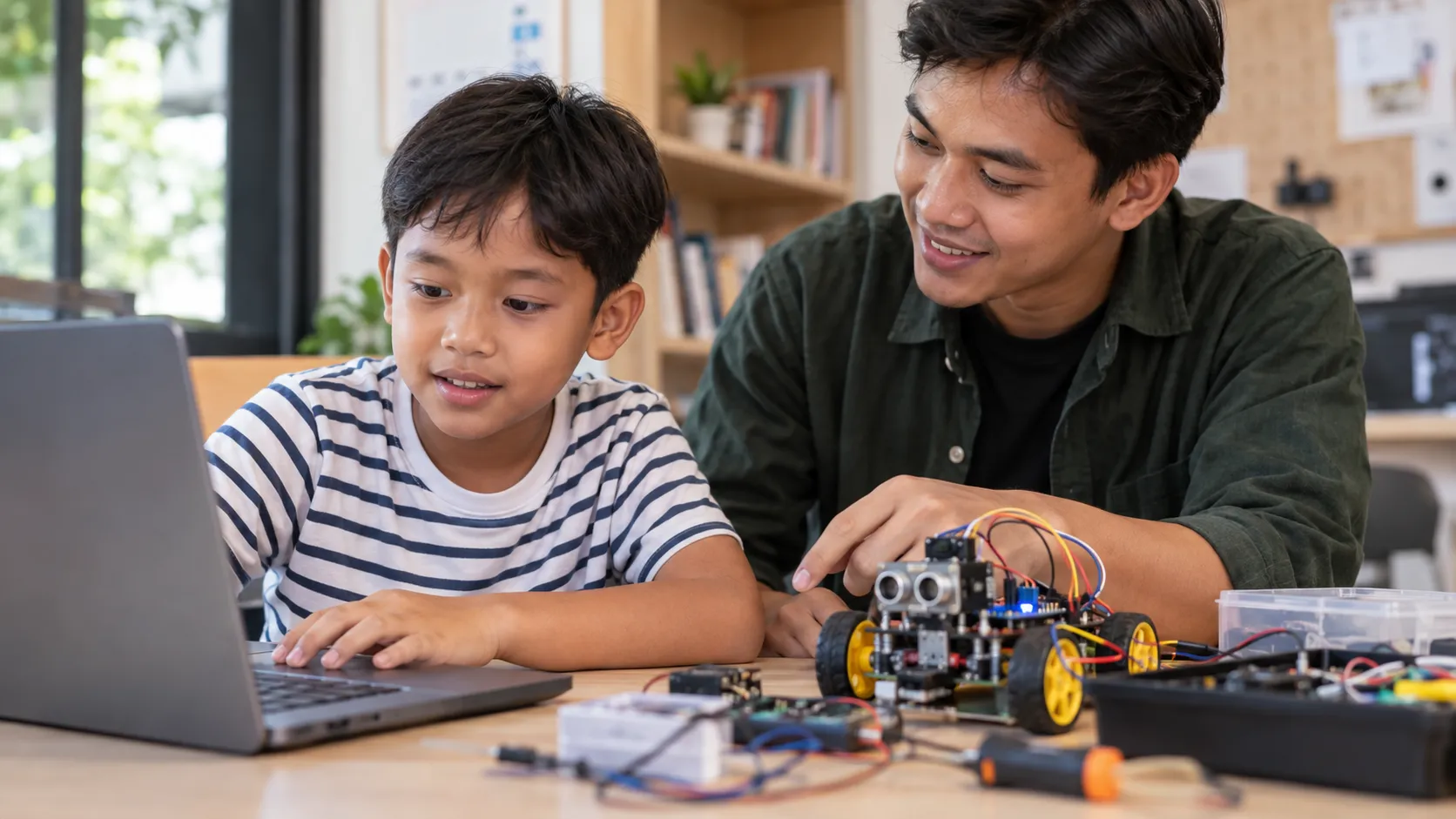
Parents do not have to choose between letting children enjoy childhood and preparing them for the future. Both can happen together. The key is to introduce children to different learning experiences, give them room to try, and observe what truly interests them, rather than continually adding demands.
For many parents, the challenge lies in the middle: they worry about pushing children too hard, but also fear regretting a late start in preparing them.
Why Do Parents Worry That Their Children Will Fall Behind?
Education presents parents with many choices. Some children begin learning English, mathematics, music, coding, robotics, and other activities at an early age. Seeing other children's progress can prompt parents to ask, “Does my child need to start now too?”
These concerns extend beyond school grades. Research on educational anxiety suggests that parental anxiety can relate to children's academic performance, educational competition, access to learning resources, and uncertainty about the future. In some circumstances, these concerns may encourage parents to increase educational investment and supervision. Source: Frontiers in Education.
Wanting to provide an early foundation is understandable. Parents want children to have opportunities to try different things before discovering their own interests.
Preparing Children Early Is Not Wrong
Introducing learning activities early does not automatically mean creating pressure. Learning environments involving parents are positively associated with children's readiness for school.
A meta-analysis on school readiness found a positive relationship between parental involvement and children's school readiness. Reading, counting, playing, problem-solving, and interacting together are all part of that learning environment. Source: Springer.
The question is therefore not simply whether children should learn early, but how those learning experiences are provided.
When Does Learning Become Pressure?
The wish to give children the best opportunities can become problematic when demands, comparisons, and targets dominate the process and leave too little room for the child.
A systematic review of 52 studies on academic pressure among children and adolescents found that 48 studies reported an association between academic pressure and at least one mental health problem. However, most studies were cross-sectional, so these findings do not mean that academic pressure always directly causes mental health problems. Source: Journal of Affective Disorders.
Additional activities are not inherently a problem. What matters is whether children still have opportunities to enjoy the process, try things, make mistakes, and express how they feel.
Guiding Children Is Different From Controlling Them
Children still need parental guidance. However, guidance does not require making every decision without involving them.
UNICEF recommends guiding rather than controlling, particularly for children aged 6–10. Children need opportunities to try, make mistakes, and gradually build independence. UNICEF also notes that children have different strengths and develop differently, so parents should reduce comparisons with other children. Source: UNICEF.
The difference can be seen in how parents communicate.
Instead of saying, “You have to take this class or you'll fall behind,” parents can invite children with questions such as, “Would you like to try making your own game?” or “Let's try it and see whether you enjoy it.”
The goal is still to introduce something useful. However, children do not feel that every new activity is another demand they must meet.
Children Still Need Choices
Giving choices does not mean allowing children to decide everything themselves. Parents can provide direction while leaving room to explore several options within it.
A meta-analysis of 153 studies involving 213,612 participants found that autonomy support from parents and teachers was positively associated with learning outcomes, including self-motivation, learning engagement, belief in one's abilities, and the ability to manage learning. Source: Educational Research Review.
For example, parents may want children to participate in a beneficial activity while offering several choices:
“Would you like to try coding, robotics, design, or something else?”
This allows parents to provide structure without taking all control away from the child.
Learning Does Not Have to Feel Like Formal Study
One way to find balance is to change how children encounter new things. Learning does not always require sitting for long periods, memorizing, or completing many exercises.
Children can also learn through play, exploration, experiments, and projects.
A systematic review and meta-analysis of guided play among children aged 1–8 found some outcomes where this approach outperformed direct instruction, including early mathematics skills, knowledge of shapes, and task switching. However, the strength of evidence varied across the outcomes studied. Source: PubMed.
This suggests that early learning does not have to mean more academic pressure. Learning can be shaped around children's natural curiosity.
Parents Do Not Have to Choose Between Two Extremes
It can seem as though there are only two options: provide many activities early so children do not fall behind, or avoid additional activities so they can enjoy childhood freely.
There is also a middle ground.
Introduce, Let Them Try, Then Observe
Parents can begin introducing different activities without immediately demanding particular results.
The process can be simple: introduce something new, give the child a chance to try, observe their response and interest, and develop it further if they show enthusiasm.
The initial goal is not immediate proficiency. Parents first provide exposure so children have opportunities to discover something they may enjoy.
What About Learning Coding Early?
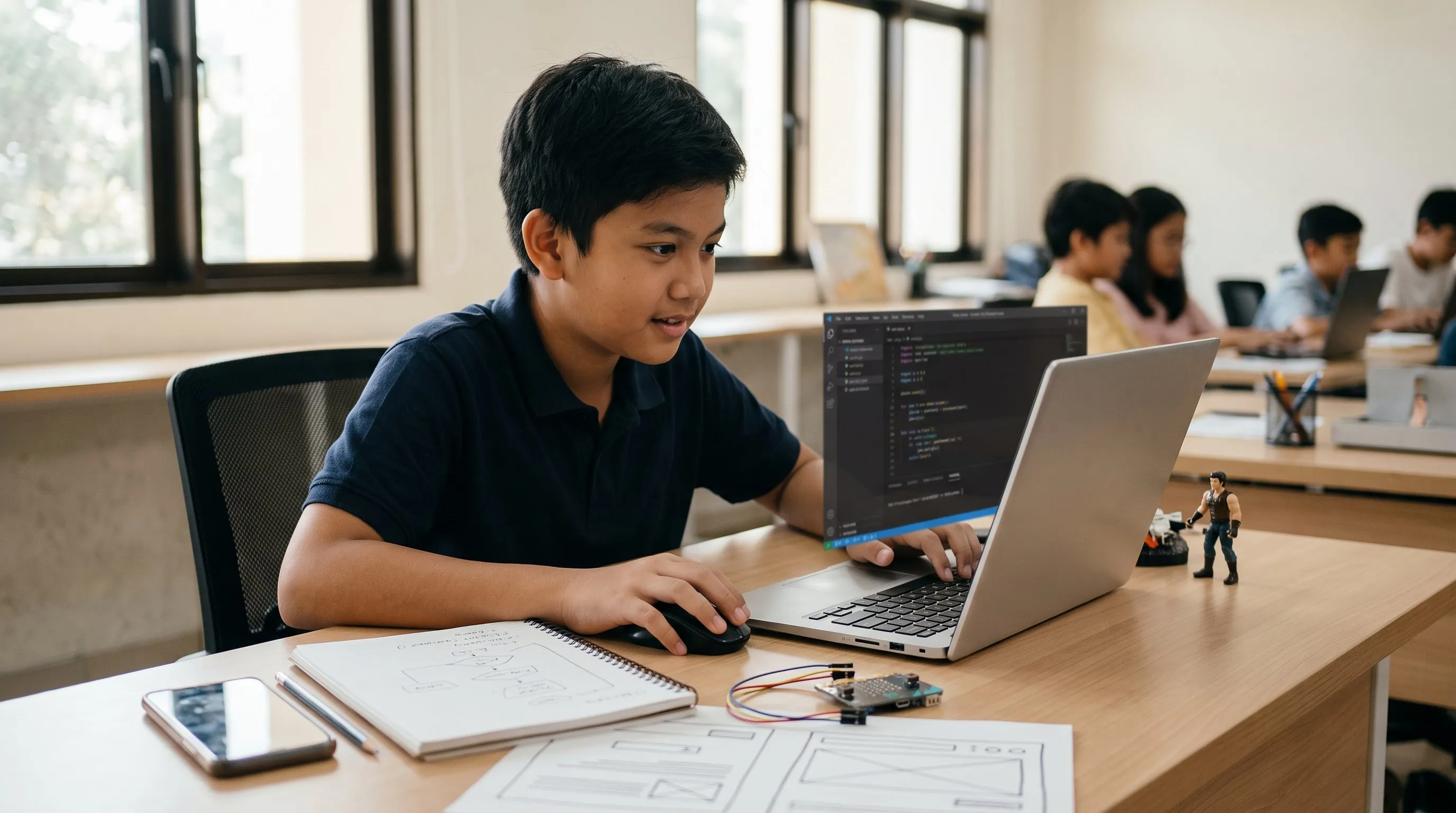
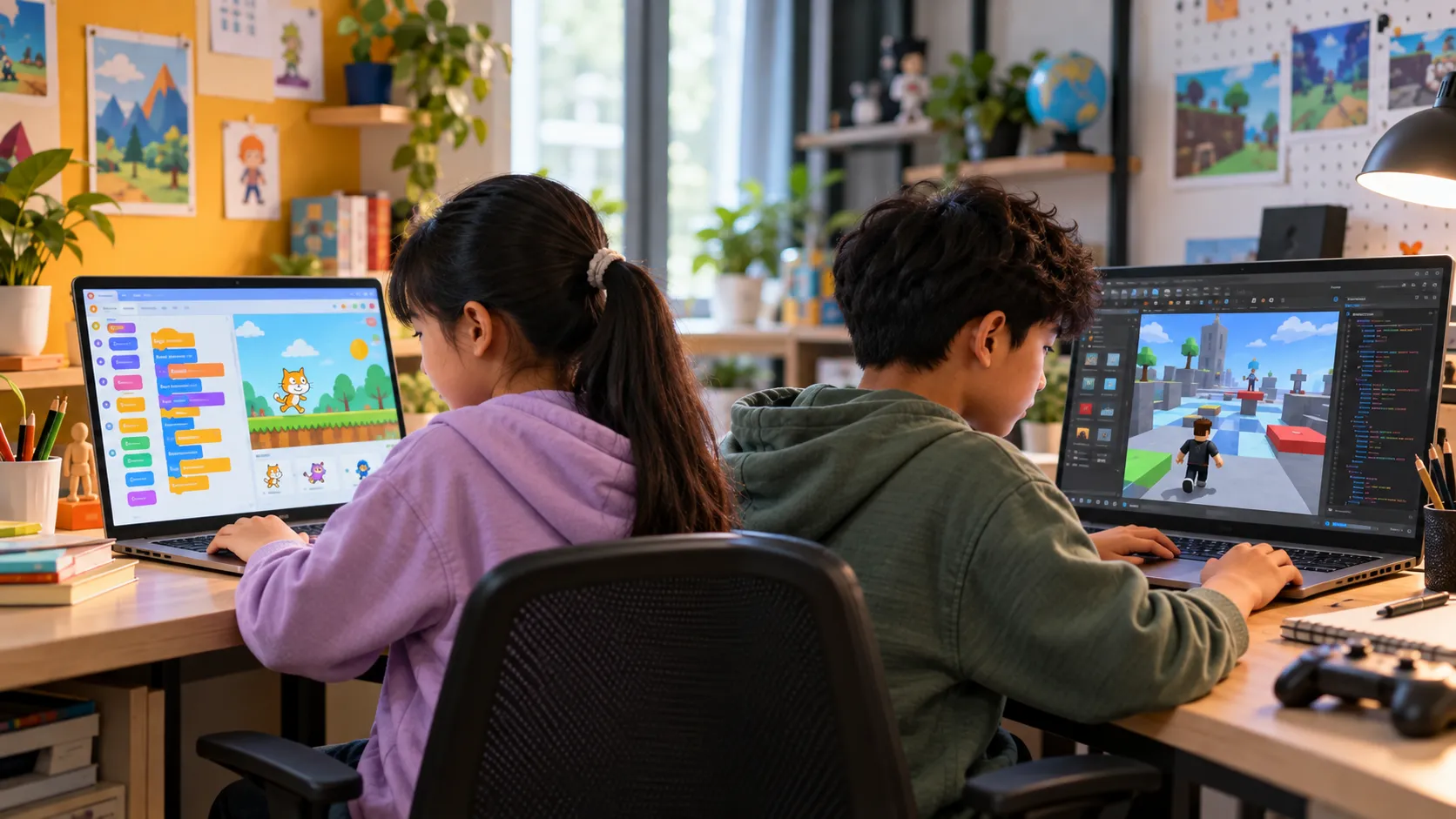
The same approach can be used to introduce coding. Children do not need to be directed toward becoming programmers from the start. Coding can be a space for exploration, creation, and problem-solving.
Children can encounter coding through making games, animations, robotics, or other simple projects, rather than as another source of academic pressure.
The focus becomes, “Does my child have an opportunity to try and enjoy creating something?” rather than, “How quickly must my child master coding?”
For parents, this approach addresses both concerns: children gain experience with new skills while retaining space to enjoy learning.
Prepare for the Future While Preserving Childhood
Preparing children for the future does not always require a busier schedule. Children need structure and guidance, alongside opportunities to try, make mistakes, play, and discover their interests.
Parents do not need to know from the start which field their child will eventually pursue. Providing opportunities to try is already a first step.
Early learning itself is not the issue to avoid. Turning every learning experience into a race against other children is.
Frequently Asked Questions
Should children learn new skills from an early age?
Children can be introduced to different skills early without immediately setting high targets. The initial focus can be trying, exploring, and observing their interests.
How can parents avoid pushing too hard?
Provide guidance and structure while offering choices and room for children to try things and express their interests. Guiding is different from controlling the entire learning process.
Can coding be introduced without overwhelming children?
Yes. Coding can be introduced through exploratory activities such as creating games, animations, robotics, or simple projects, allowing children to learn by making things.
Let Children Try and Discover Their Interests
We do not need to push children to decide their future now. We can give them opportunities to explore different possibilities.
If you want to introduce coding, game development, robotics, and technology through project-based learning, learn more with us at Koding Akademi. Let children try first, enjoy the process, and discover what truly interests them.